Immersive projections for museums: how an experience is made
From archive to gallery in six steps: how we design immersive projections and video installations for museums and exhibitions, from Stupinigi to Pinacoteca Albertina.
An immersive projection works when visitors stop watching a screen and find themselves inside a story. It is not a special effect added to an exhibition: it is a way of telling, with its own rules and risks. The most common is empty wonder, images that move a lot and say little.
To avoid it we work as on a documentary: first research, then writing, then shooting and editing. With one important difference: here the screen is an entire room.
Four projects compared
| Project | Venue | Starting point | What it became |
|---|---|---|---|
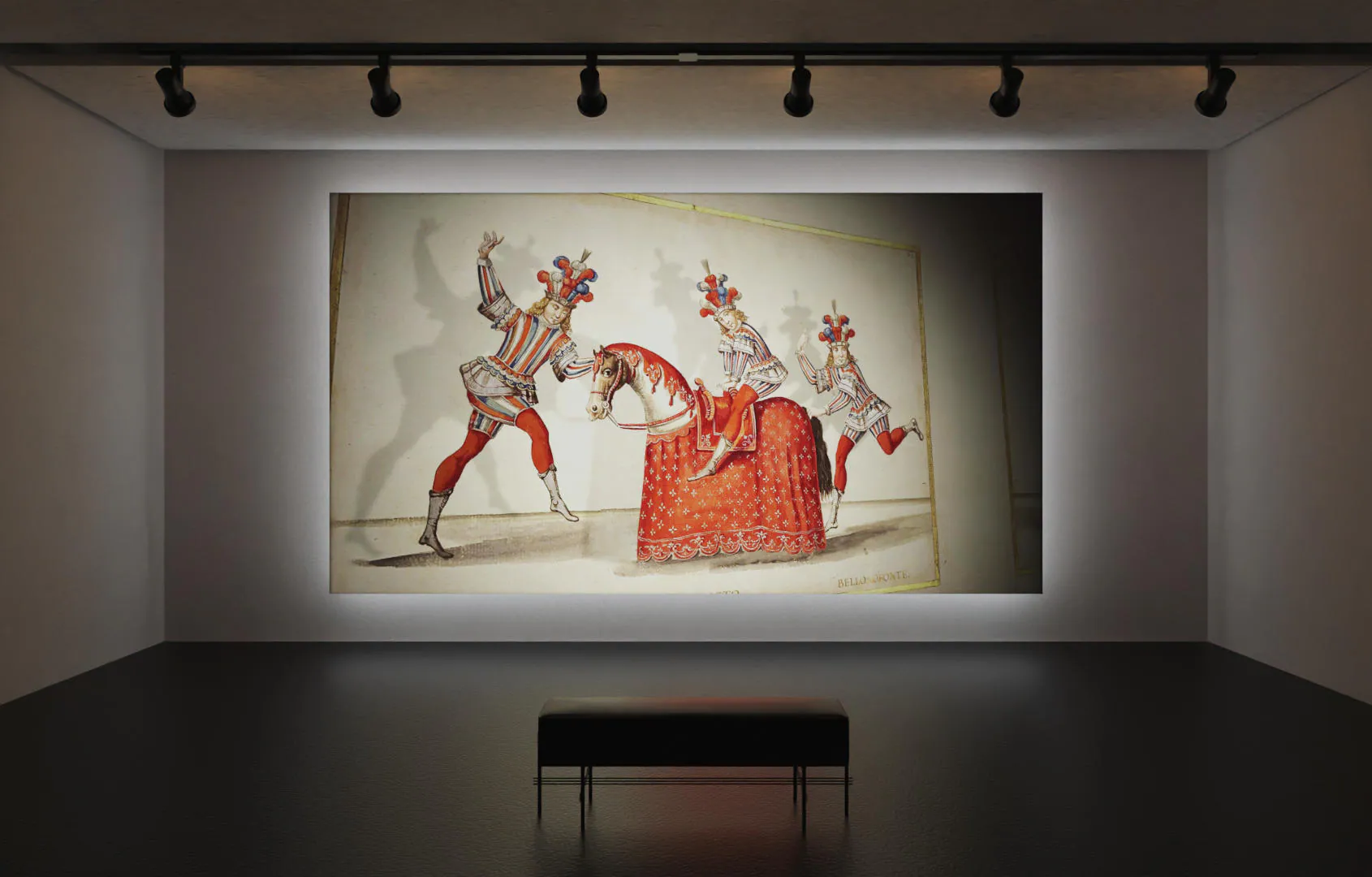
| Carnival Wonders, 2022 | Palazzina di Caccia di Stupinigi | Prints and drawings of Savoy court festivities, 16th to 19th century | A room where floats, riders and stage machines move around the audience |
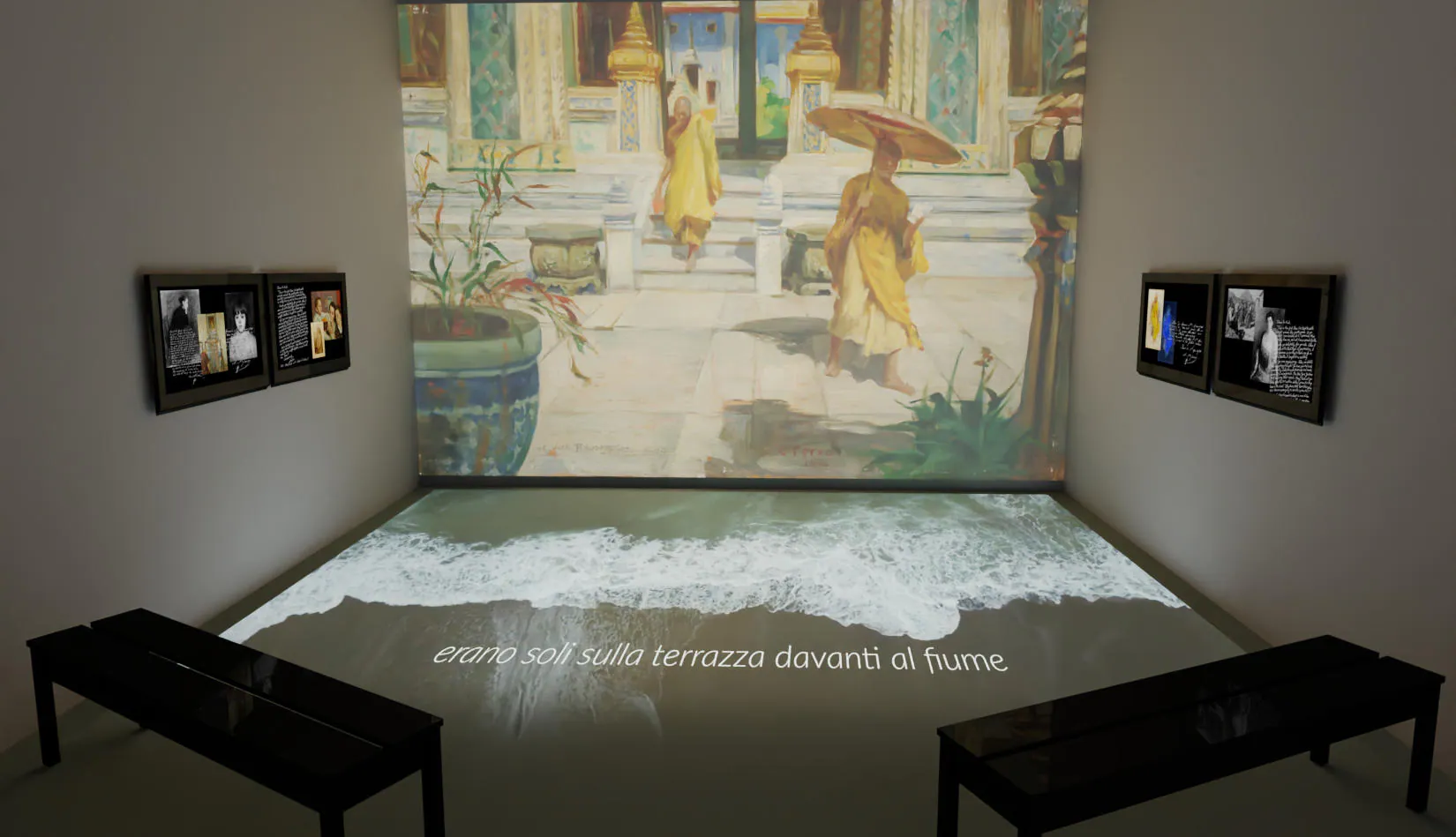
| Pinacoteca Albertina, 2021-2022 | Turin | Paintings, archive documents, the story of a historic café | Projections along the visit: a painting opening in depth, a floor turning into water |
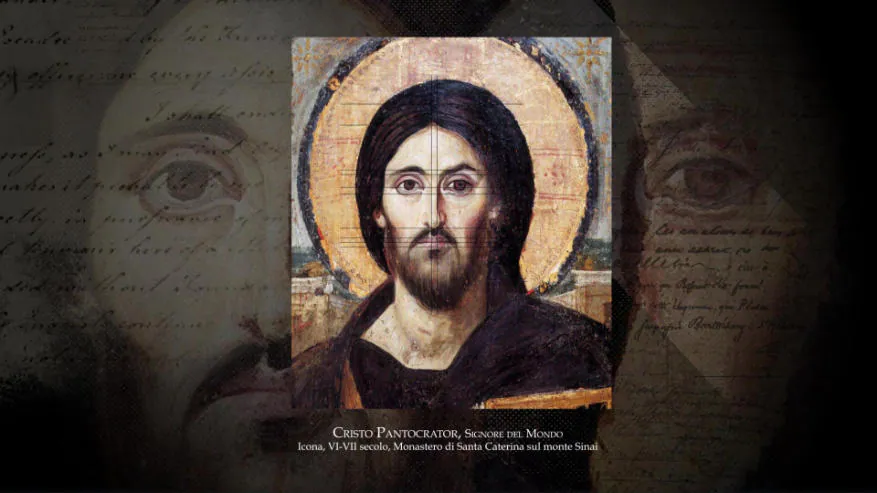
| Volti nel Volto, 2022 | Pinacoteca Albertina | The iconography of the face on the Shroud | Two films: a hand redrawing the face, icons split into layers and set in depth |
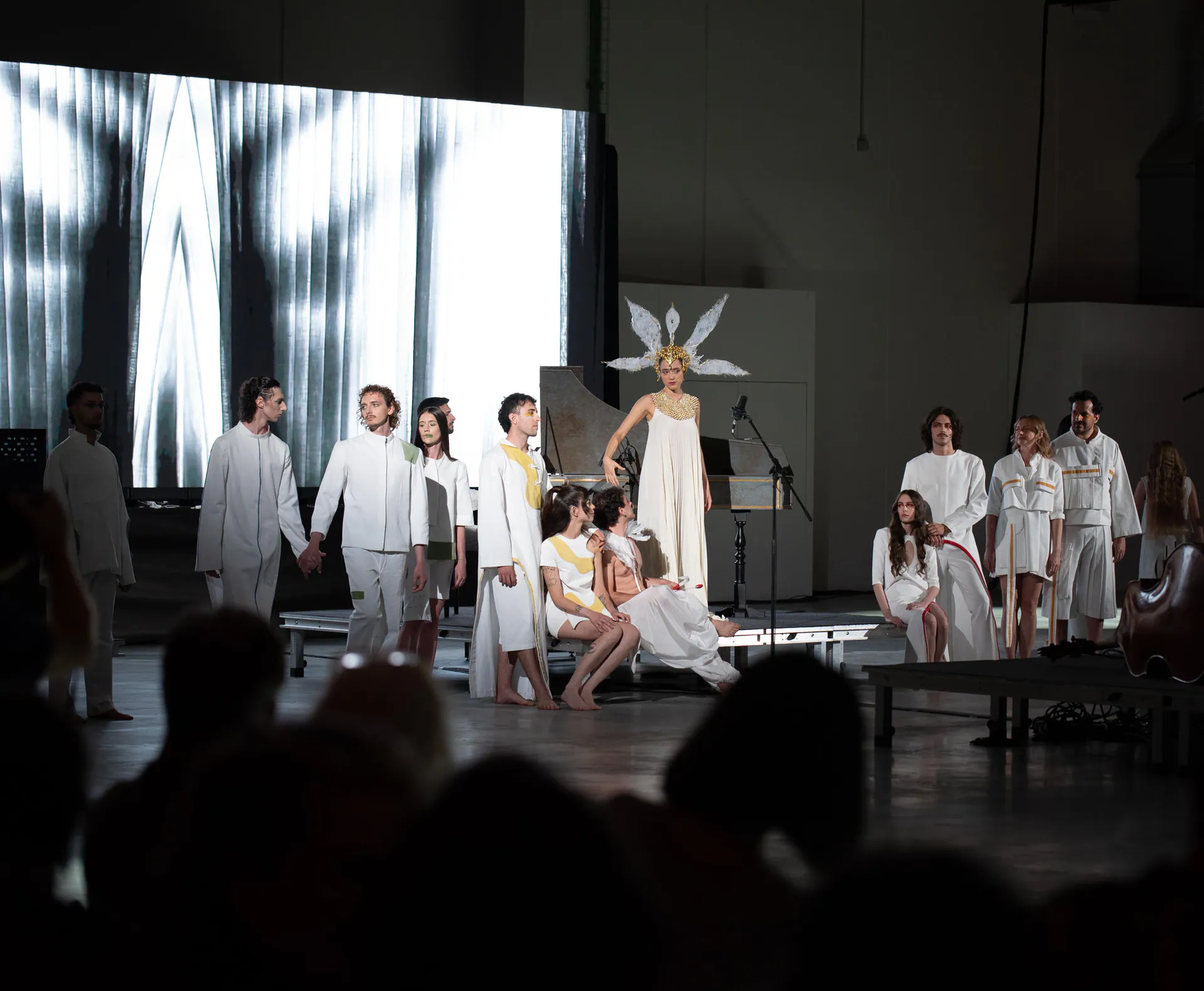
| ARWE Festival, 2026 | SET Scalo Eventi Torino | The garments of a fashion show | A backdrop of about 60 minutes for a panoramic 2.67:1 LED wall |
The method, in six steps
- Sources. Every project begins with materials: paintings, prints, documents, photographs. At Stupinigi we worked on images of carnival festivities at the Savoy courts. Before animating something you need to understand it, and choose what to tell.
- The story. We write a structure, as for a film: a beginning, a development, an ending. We decide its length, considering how long visitors really stay in a room.
- The visual language. Images are split into layers and set in motion in three-dimensional space: that is how a painting gains depth. Rhythm and sound design are defined at the same time.
- The room. Every space is different: walls, floor, height, projectors, LED walls, the visitors’ path. For ARWE we avoided thin lines and small text, which would have been lost on that screen, and checked everything first on a render of the venue.
- Production. Animation, compositing, filming when needed (at Pinacoteca Albertina also with the historic Baratti & Milano café), colour grading and sound mix.
- Installation and testing. The last stretch happens on site, with the curators: positioning, corrections, tests with the preview audience. At Pinacoteca Albertina the first visitors’ reactions guided the final adjustments.
Before you start, ask yourself
- What should people understand or feel when they enter the room?
- How long will they stay? Standing or seated?
- Which materials do you already have, and which do you hold the rights to?
- Does the room already exist, or does it need to be built from scratch?
Two of the projects in the table were developed with groups of students from the Accademia Albertina di Belle Arti in Turin, coordinated at every stage: a way of bringing a young eye into the museum, with a professional method.
Find out more on the Immersive experiences for museums page, or tell us about your project.