Photographing a classical concert without disturbing it
Lang Lang, Martha Argerich, Antonio Pappano, Grigory Sokolov: four concerts in Turin and four different ways of photographing classical music in silence.
In a classical concert silence is part of the music. Whoever photographs it has to become invisible: no shutter noise, no movement in the hall at the wrong moment, no flash, ever.
For several seasons we have photographed the Lingotto Musica concerts at the Auditorium Giovanni Agnelli in Turin, the hall Renzo Piano designed inside the former Fiat Lingotto factory. It is a large hall, almost two thousand seats, lined with wood: on stage the light is warm and even, while the stalls stay dark. For a photographer this means working from a distance, often with long lenses, and choosing carefully where to look from.
Before entering the hall
Every concert has its own rules, agreed in advance with the venue and the artist’s team:
- which positions we can work from, and whether we can move during the concert;
- in which pieces we can shoot, and for how long;
- whether the artist needs to see the selection before publication.
Then we study the programme. Knowing when an intense passage or a slow movement is coming means being ready at the right moment, and staying still when the music asks for it.
Four concerts, four challenges
Lang Lang, the recital
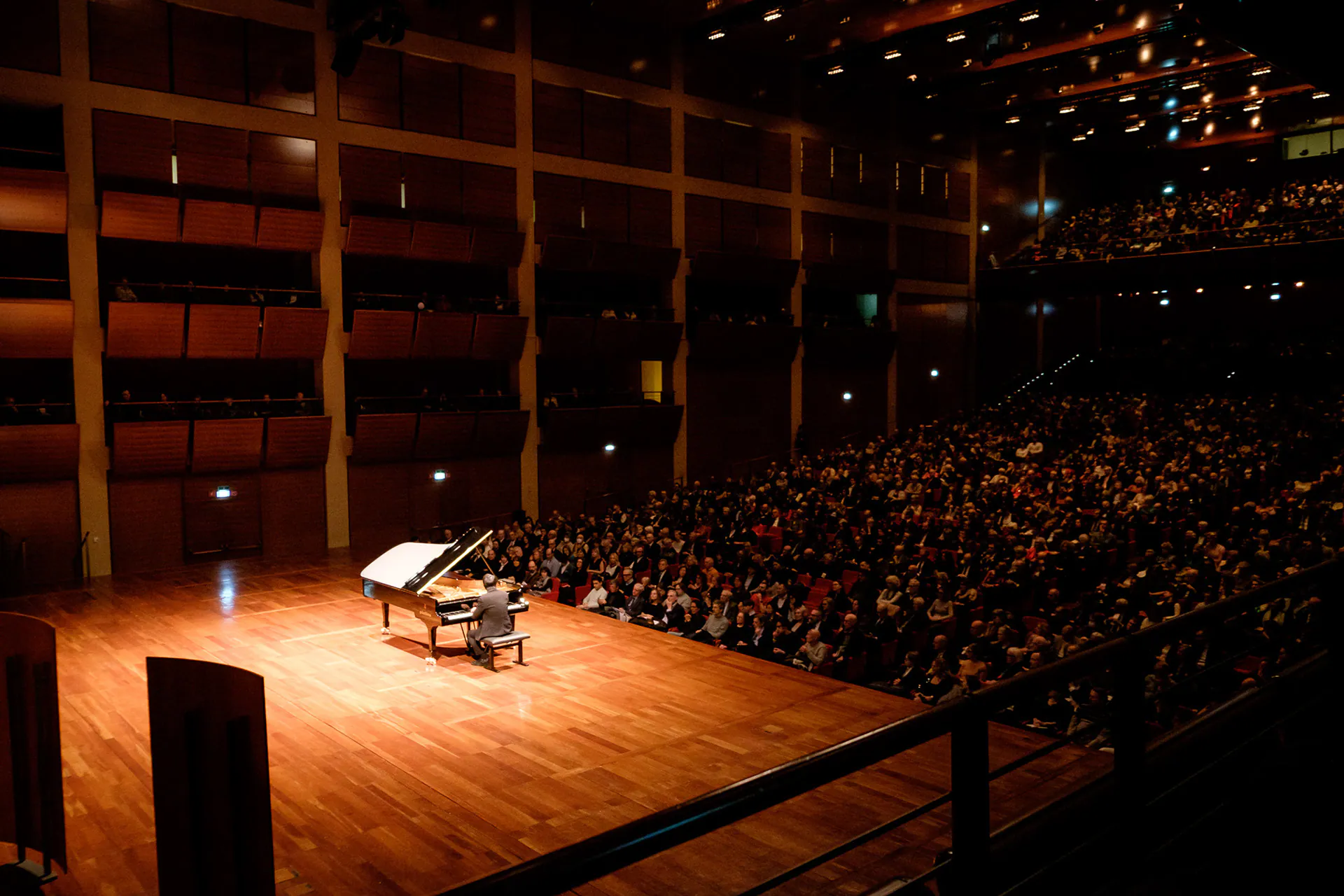
Lang Lang, 23 February 2024. A view from above tells the evening better than a close-up: one man, one piano, a full hall.
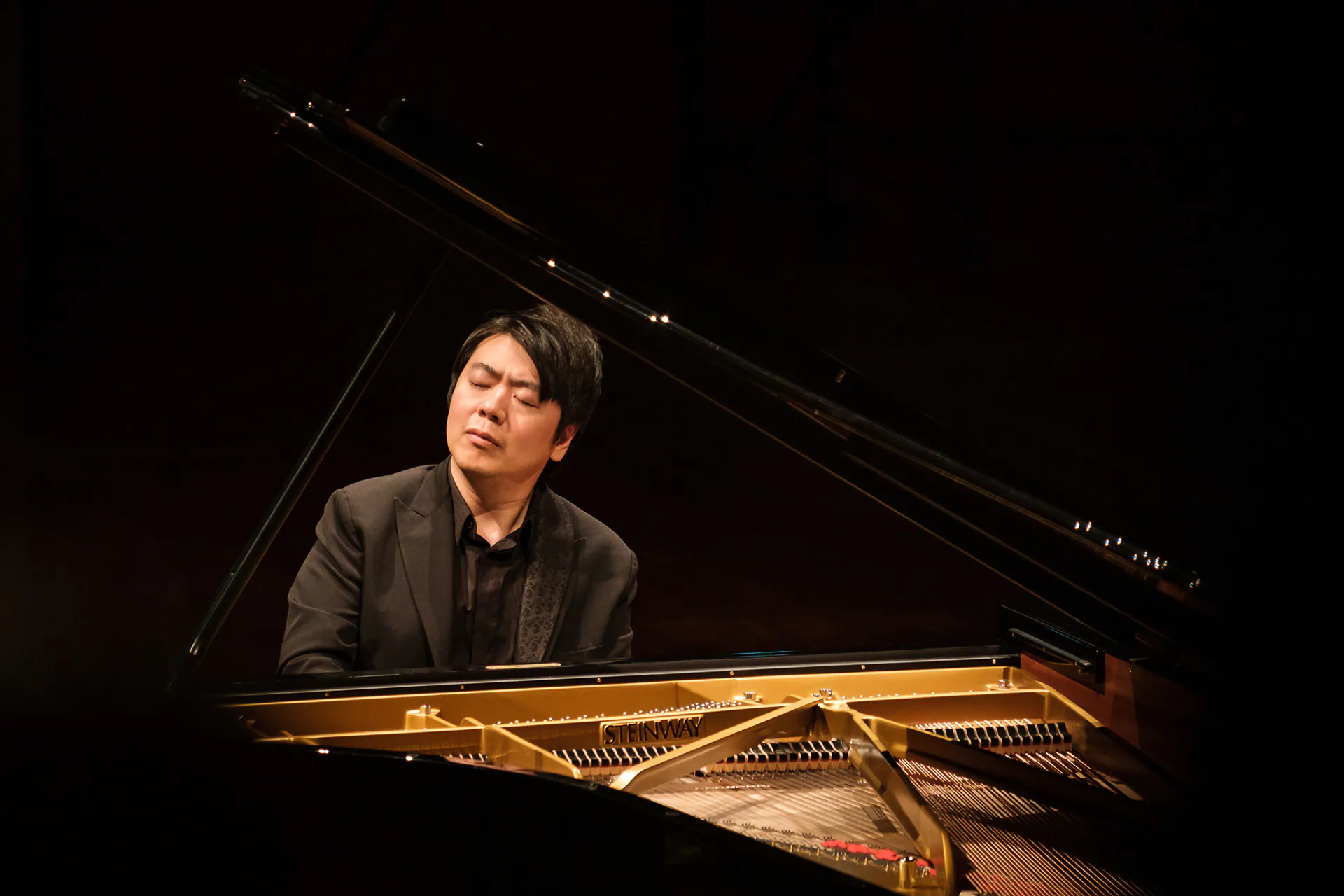
A recital has a single protagonist, and the risk is making a hundred identical pictures. We alternated three distances: the close-up, with the piano lid framing the face; the full figure on stage; the hall from above, which gives the scale of the event.
Martha Argerich with the Orchestre Philharmonique de Monte-Carlo
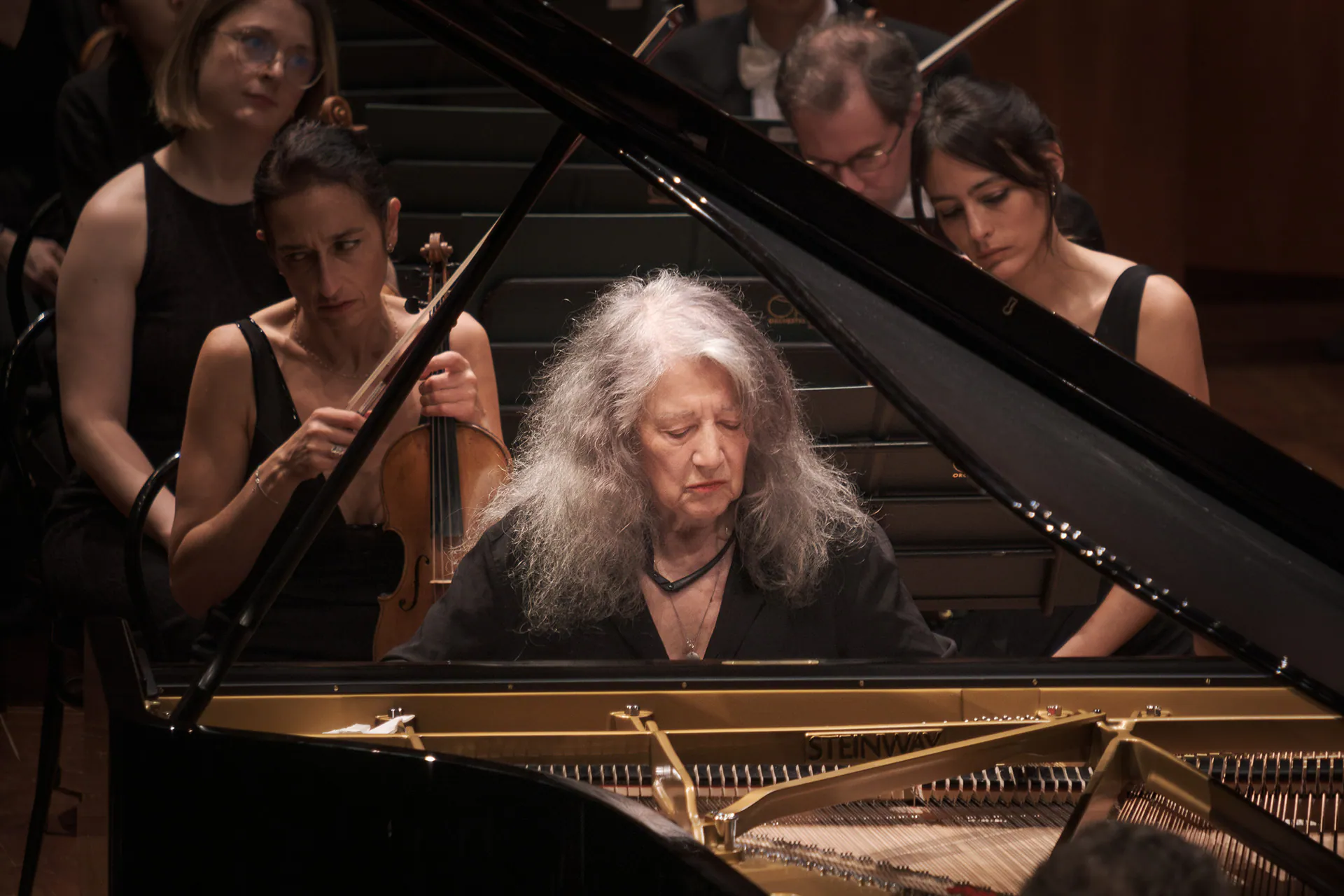
Martha Argerich among the orchestra’s musicians, conducted by Charles Dutoit.
With an orchestra on stage the soloist is surrounded by dozens of players. You need a position where her face stays clear, and the patience to wait for the moment when the orchestra frames her instead of hiding her. Backstage it pays to look at objects too: the orchestra’s trunk stencilled with Monte-Carlo is a detail that tells the story of a tour on its own.
Sir Antonio Pappano and the Chamber Orchestra of Europe
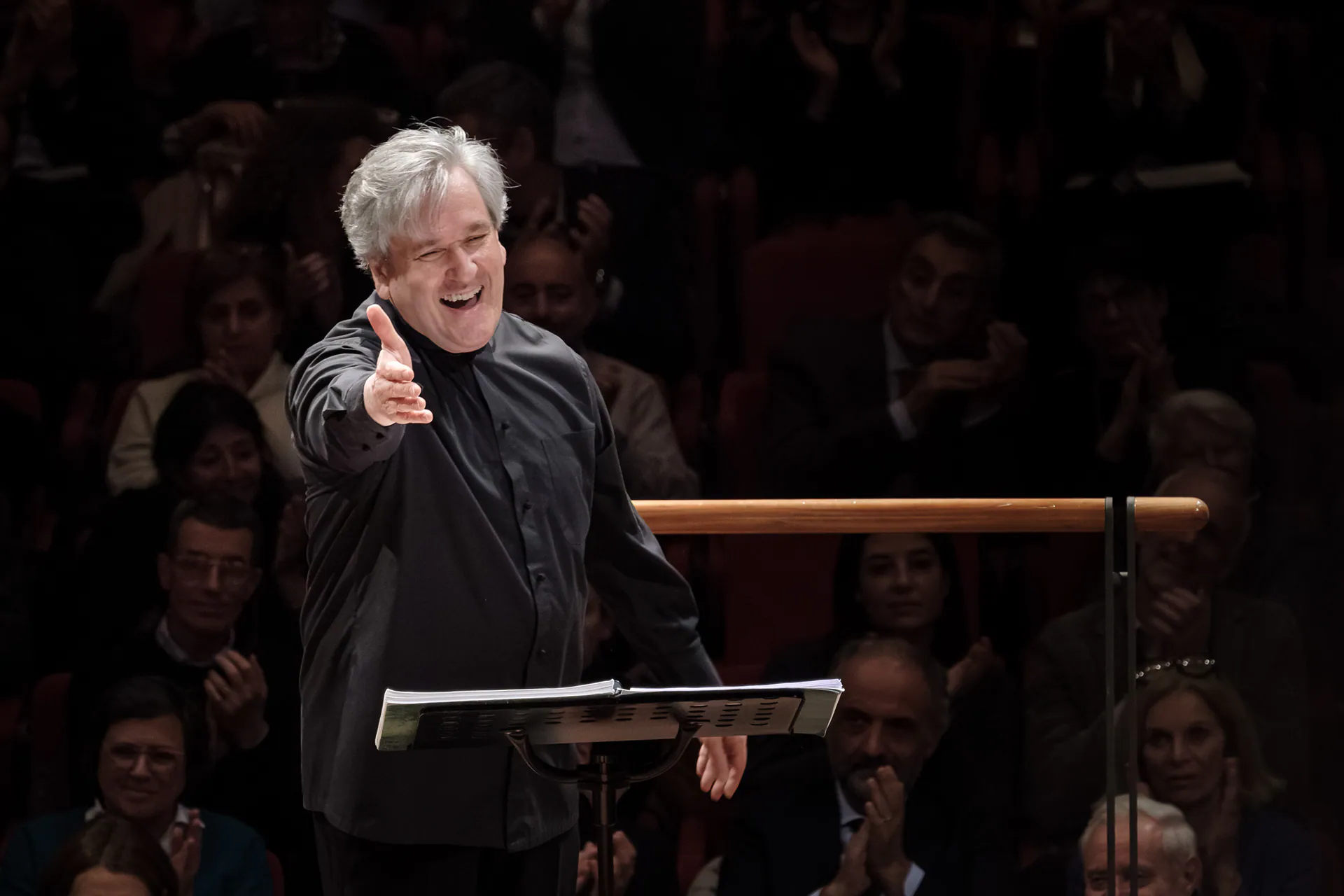
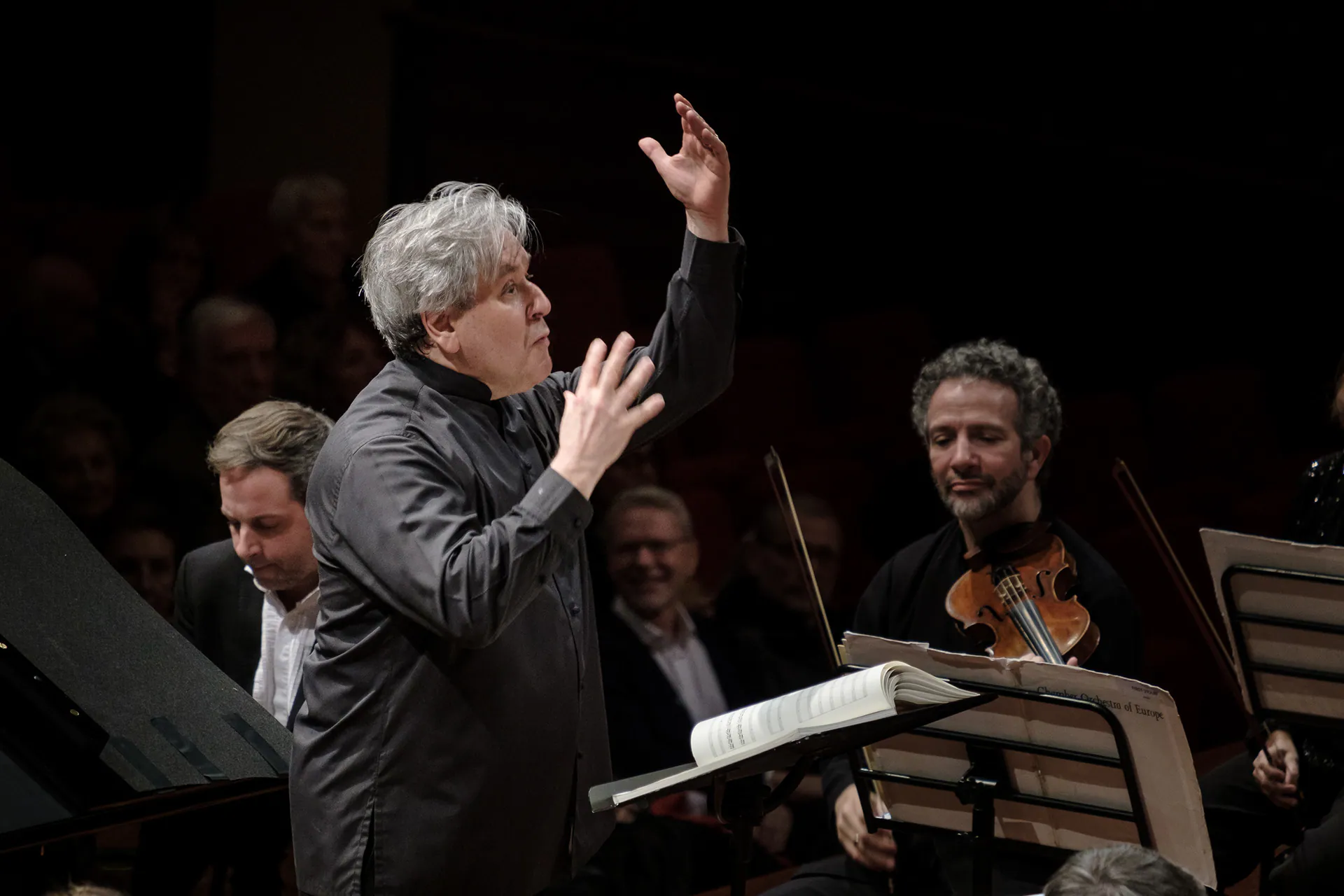
Sir Antonio Pappano: the conductor’s gesture is the centre of the image.
With a conductor the story runs through the gesture: the hands, a glance towards a section, the upbeat. Pappano conducts with his whole body, and the difficulty was choosing among many expressive moments without repeating ourselves. Backstage, at the end of the evening, we photographed Pappano with the pianist Bertrand Chamayou: a simple picture that still tells the meeting of the two protagonists.
Grigory Sokolov
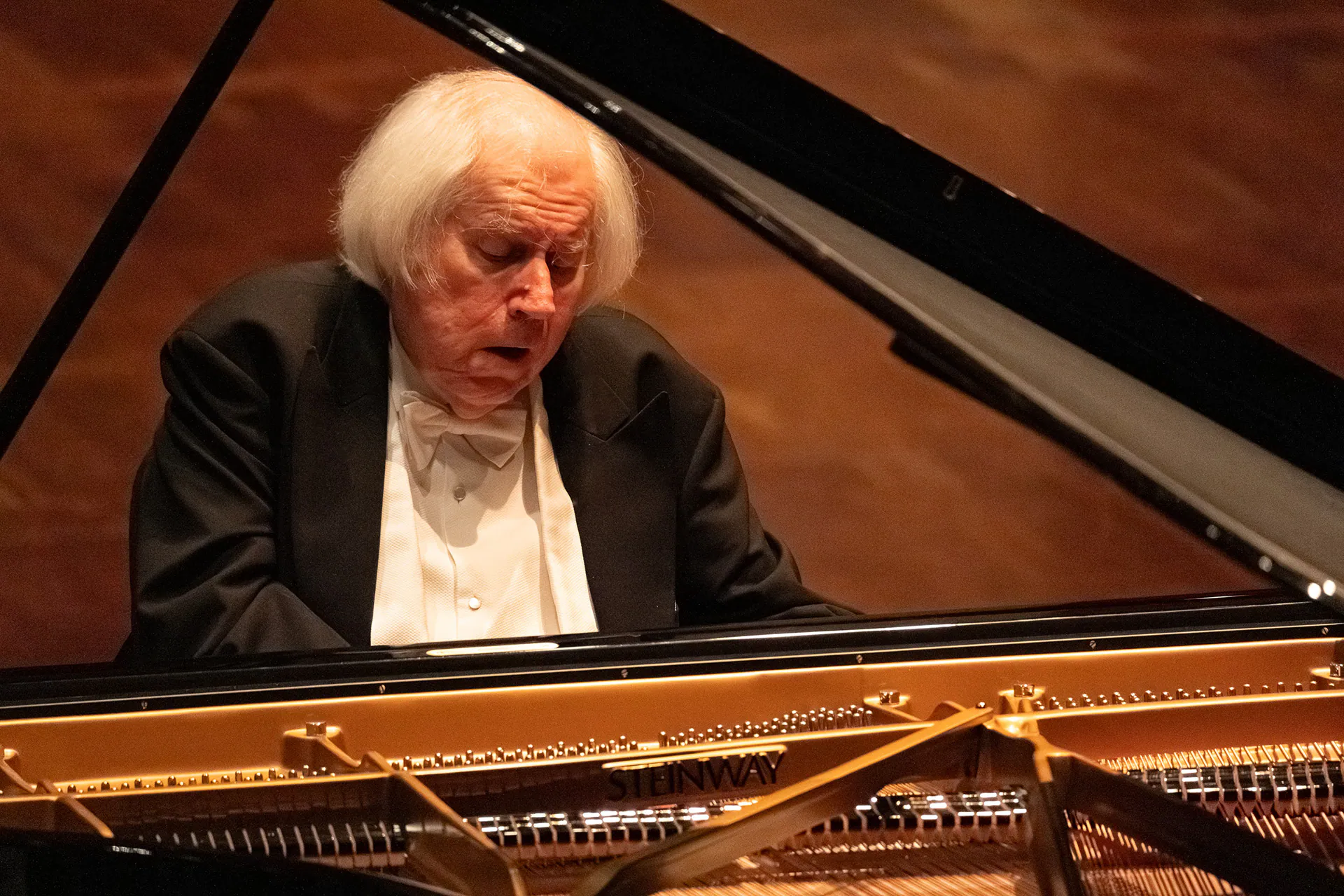
Grigory Sokolov in the gathered light of his recital.
Sokolov’s recitals are famous for their intensity, their concentration and their generous encores. Here the rule was to take away: few frames, no unnecessary movement, the hall left in the half-light the pianist looks for.
After the concert
A selection reaches the press office the next day, already sized for print, web and social media. Over time the images of a season become an archive: next year’s posters, the season brochure, the sponsor reports.
If you run a concert season or a festival, let’s talk.