Installation views: how to photograph a contemporary art exhibition
Which images you need, who they are for and how they are made: a practical guide to installation views, with shows by Linda Fregni Nagler and Luca Campigotto.
An exhibition lasts a few weeks or a few months. Installation views remain: in the catalogue, in the artist’s archive, in press coverage, in the gallery’s portfolio, in the files for future loans. Often they are the only proof that the show, with those works in those rooms, really existed. That is why they must be made as documents, not as souvenirs.
Which images you need, and who for
| Image | What it is for | How we make it |
|---|---|---|
| Room overview | Catalogue, press, archive, grant applications | With the show closed, verticals corrected, viewpoint at eye level |
| Wall or group of works | Showing how the works relate, as the curator planned | Frontal framing, never cutting works at the edges |
| Single work | Artist’s archive, sales, loans | Frontal, controlled colour, no reflections |
| Detail | Materials, surfaces, techniques | Room light, sometimes raking, if the installation allows |
| Room with visitors | Communication, social media, sponsors | During the opening or a visit, with people giving scale |
Not every show needs everything. An artist documenting their work mostly asks for works and walls; a museum promoting a show asks for overviews and visitors. Say so in advance, because it changes timing and approach.
Three shows, three different problems
Small works in large rooms
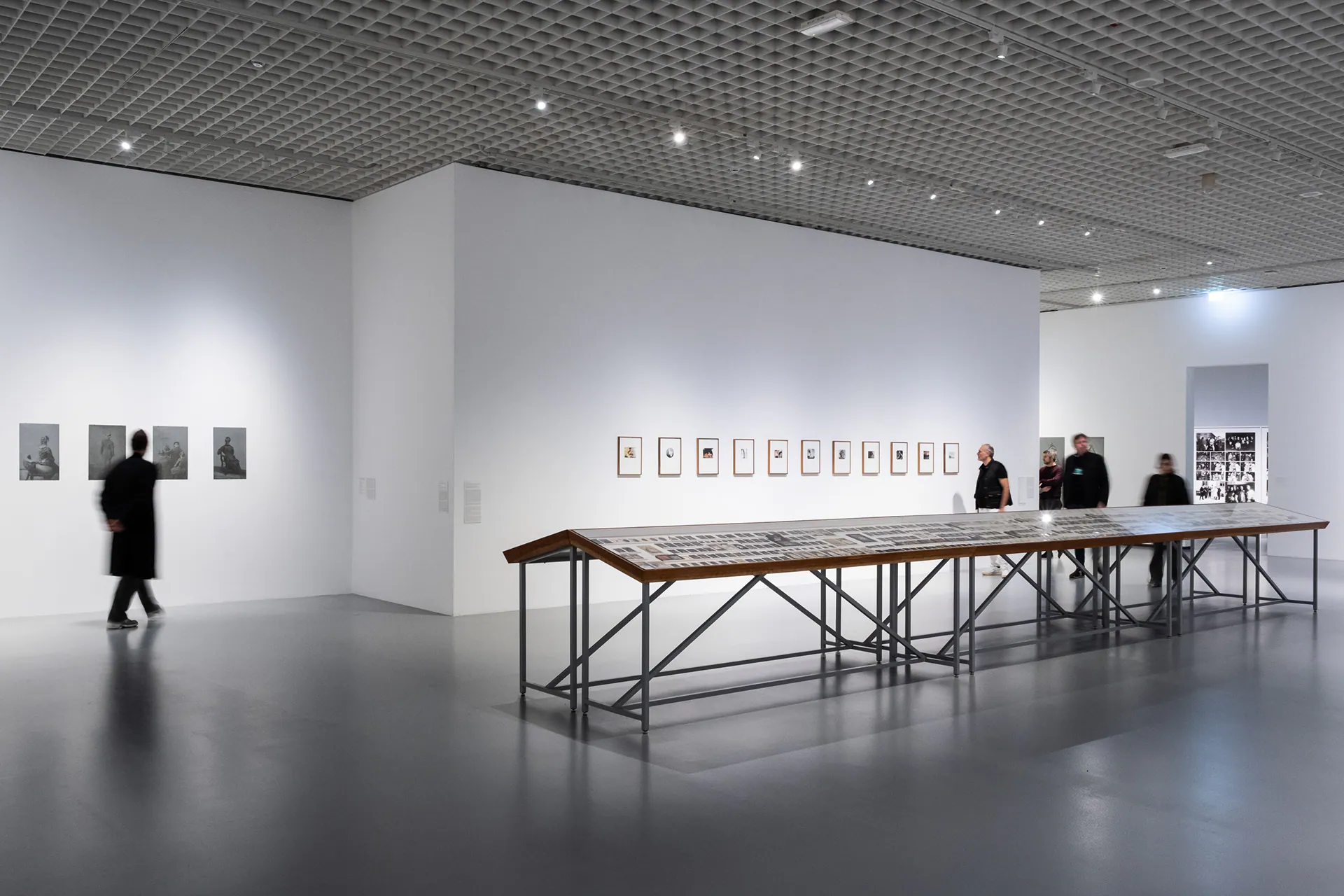
Linda Fregni Nagler, Anger Pleasure Fear, GAM Torino. The case in the middle of the room holds hundreds of small vintage photographs.
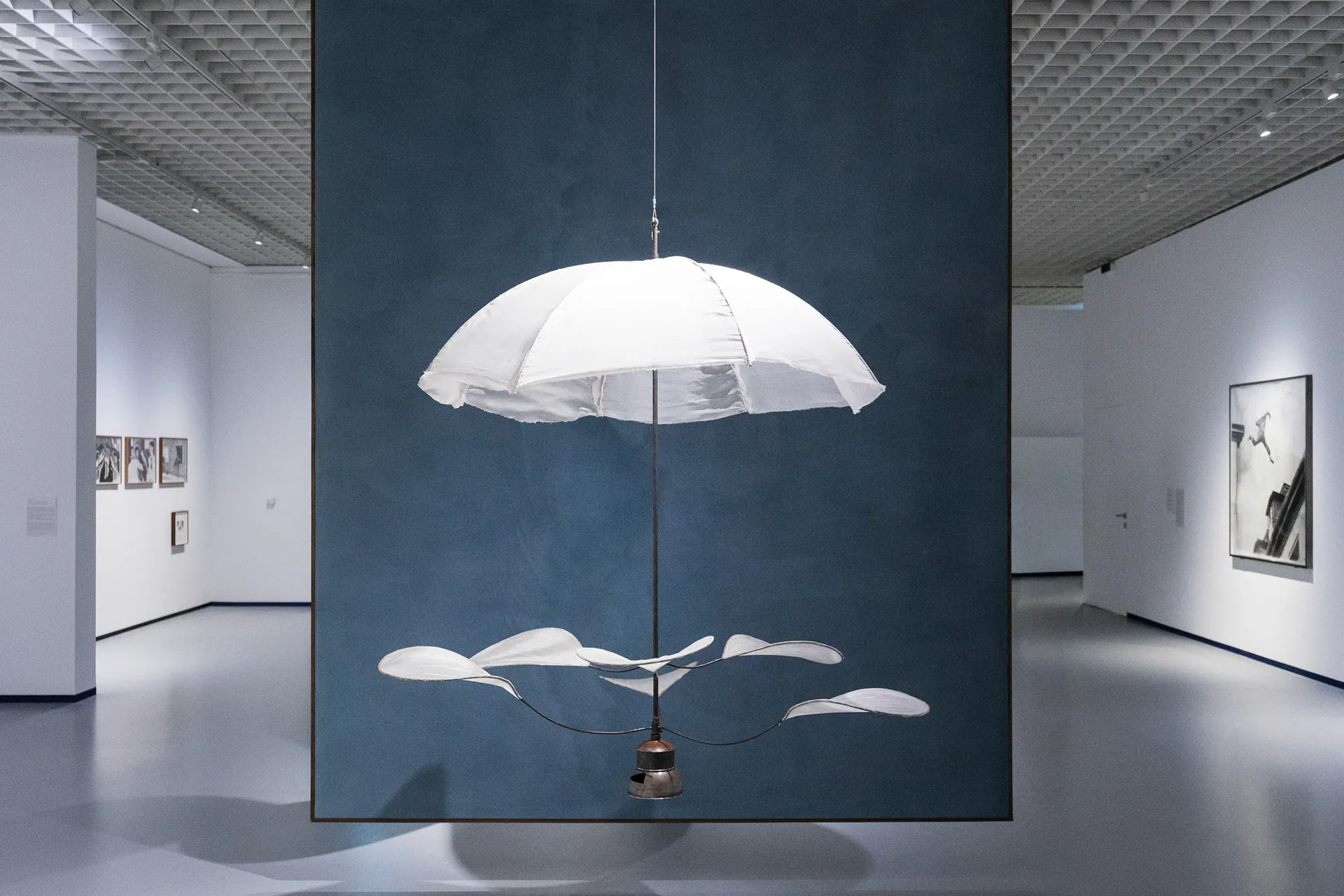
In Linda Fregni Nagler’s Anger Pleasure Fear at GAM Torino, curated by Cecilia Canziani, large prints and suspended installations sat next to cases full of nineteenth-century photographs a few centimetres wide. The same shoot had to work at two scales: the whole room and the tiny portrait under glass, without reflections.
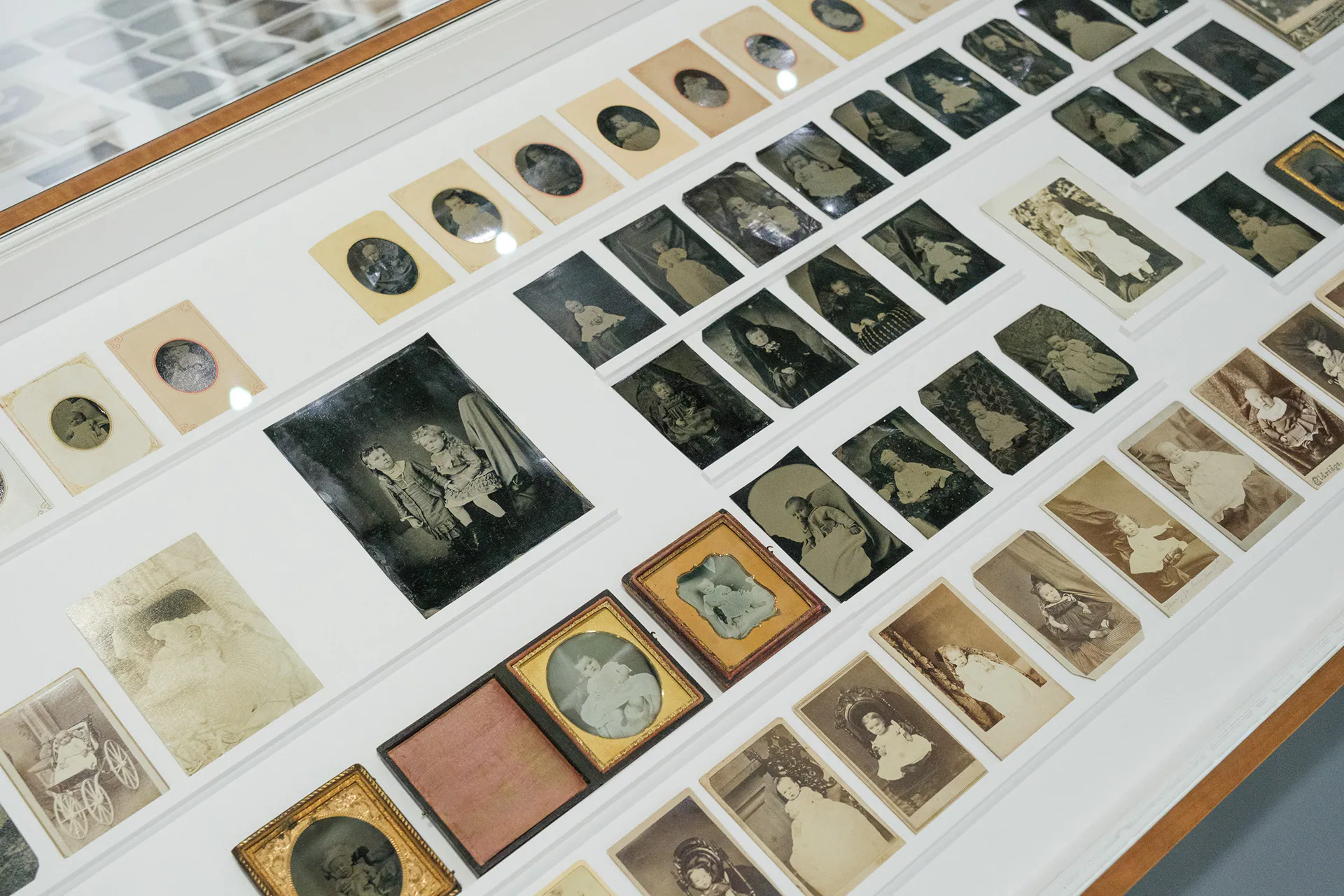
Detail of a case: here the problem is the glass, which reflects the ceiling lights.
Large prints and an immersive room
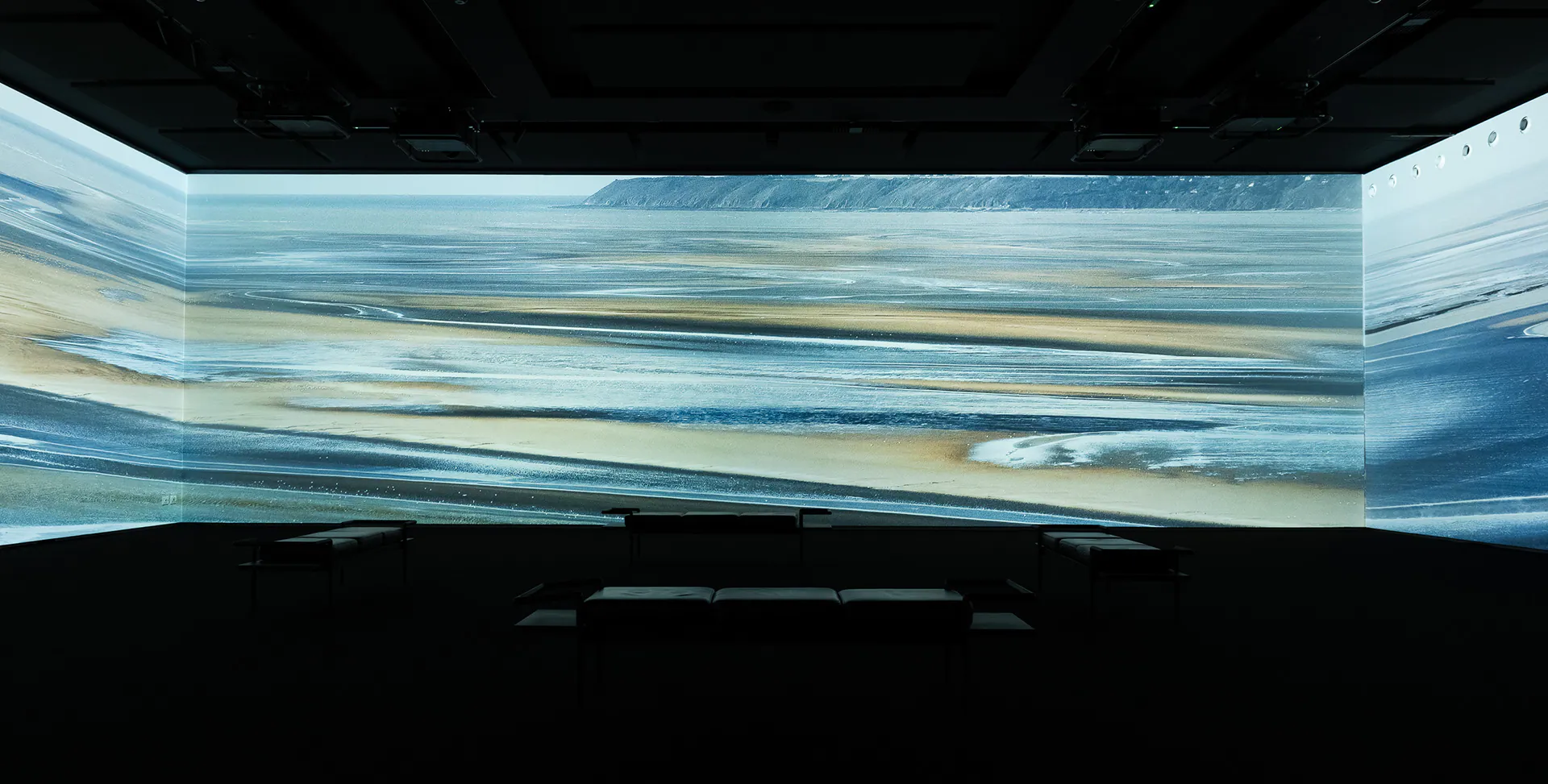
Luca Campigotto, Wandering Europe, Gallerie d’Italia Torino. The room with wall-to-wall projections.
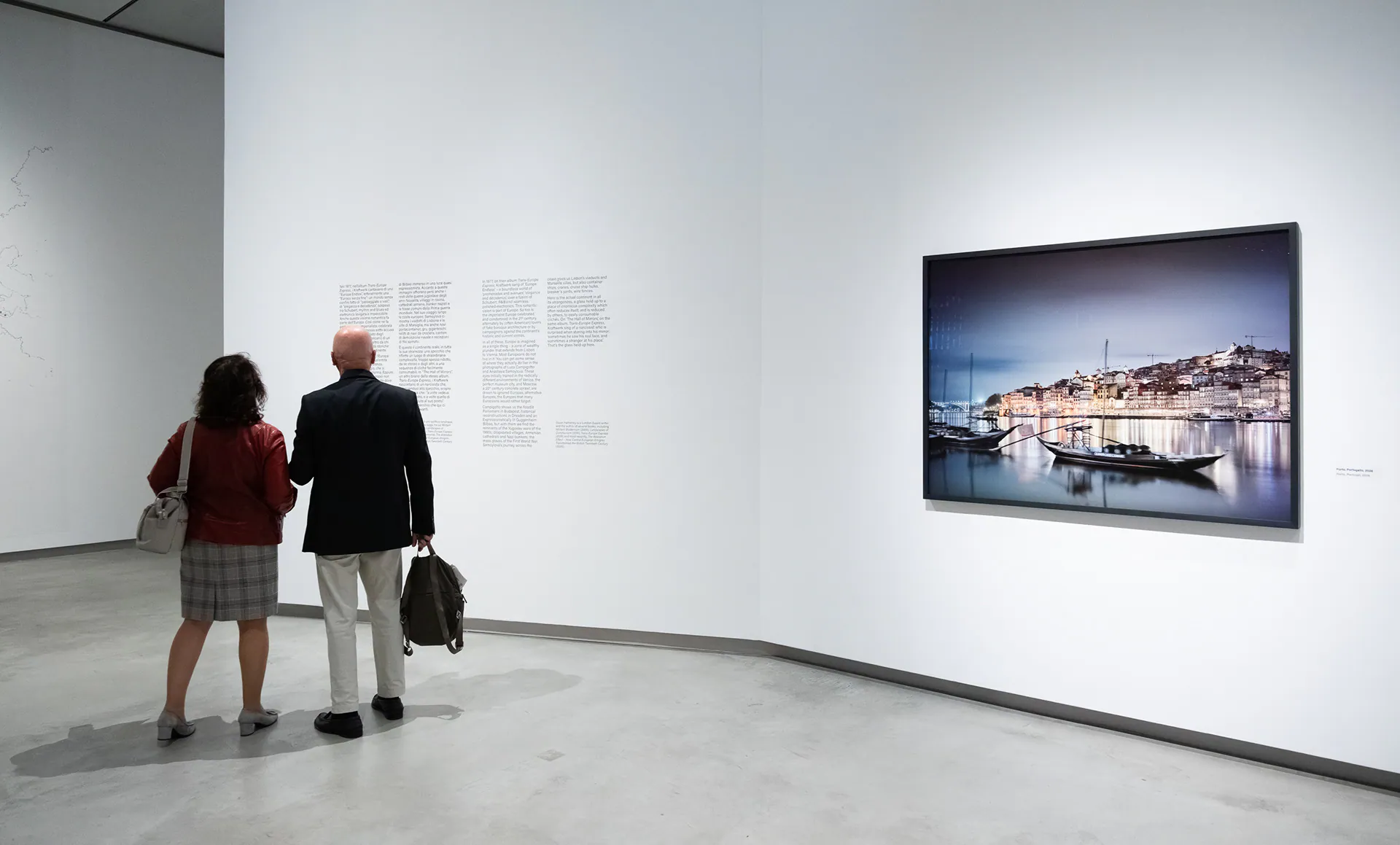
Luca Campigotto’s Wandering Europe, curated by Walter Guadagnini, fills the underground galleries of Gallerie d’Italia on Piazza San Carlo from 1 October 2026 to 7 February 2027. The large colour photographs had to be shot without reflections and with colour true to the prints; the projection room instead needed long exposures, metered on the projected images rather than on the darkness around them.
A home that became an archive
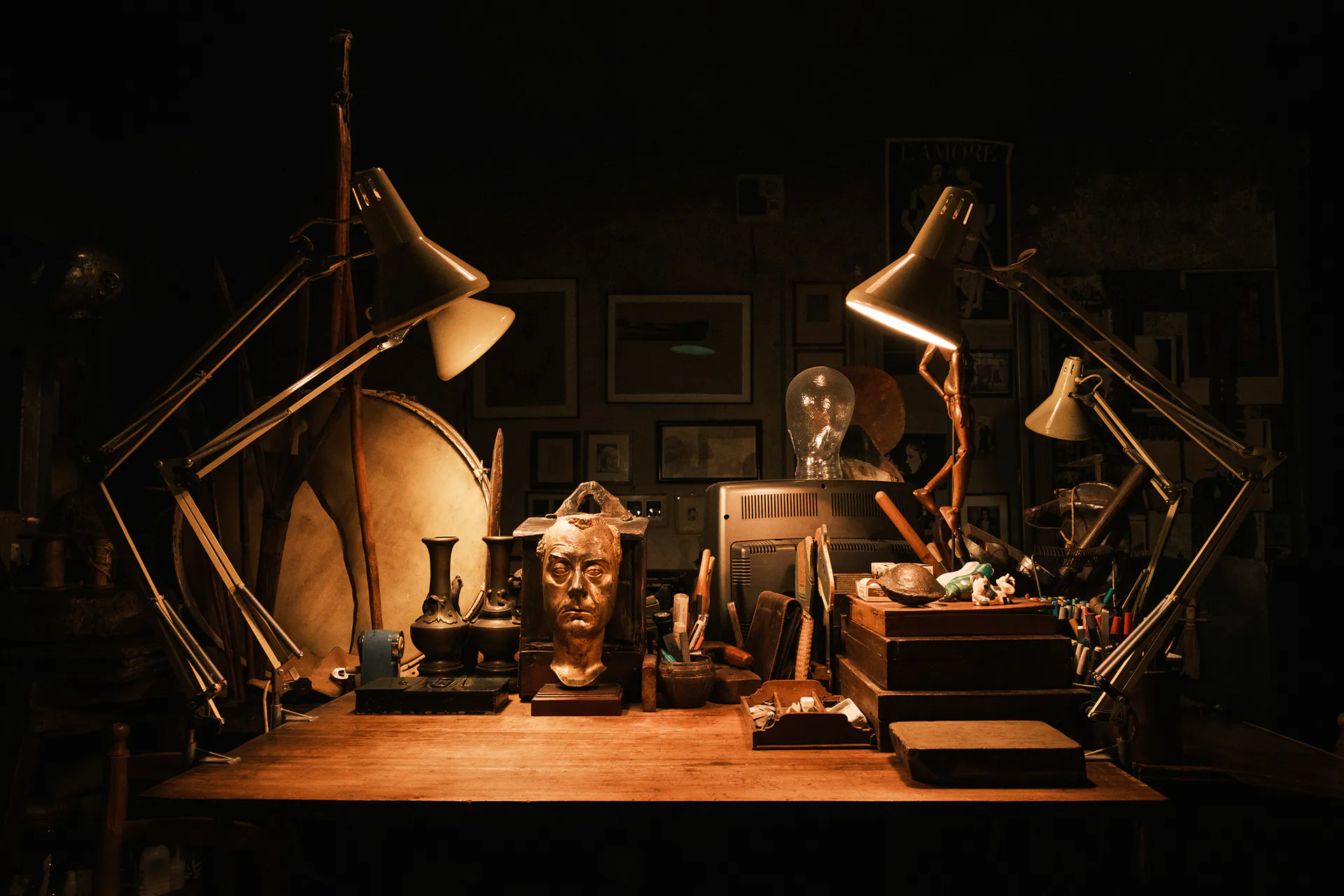
At the Casa Museo Carol Rama in Turin this was not an exhibition but the artist’s home and studio, kept as she left them. Every object is a document: photography serves the archive before communication, and the image rights belong to the archive itself.
Before the shoot: a checklist for organisers
- Book the session after installation and before the opening, or on a closing day.
- Switch on the final lighting, the one visitors will see.
- Prepare the list of works with titles, dates, media and credits: correct captions are worth as much as the photographs.
- Set priorities: the works not to miss and the images the press needs first.
- Have someone on site to move a sign or open a door.
What we deliver
High-resolution files for print and light versions for the web, with author, rights and captions written into the metadata of every image. If you are preparing an exhibition, tell us about it.