Fidelis Amatrix

The gestures, voices and knowledge of a place

Local traditions, photography and multimedia documentary

A loom found in a cellar. The older women of a village teaching again. Hands preparing the threads and weaving once more. Fidelis Amatrix tells the heritage of Amatrice and the surrounding area through the people who hold its knowledge: craft traditions, food culture and local memories gathered in photographs, video and testimonies.

Author
Mattia Gaido
Sector
Fine crafts
Medium
Photo and film
Location
Amatrice and Campotosto, Italy
Year
2018
Services
Crafts and heritage, Documentary films and interviews
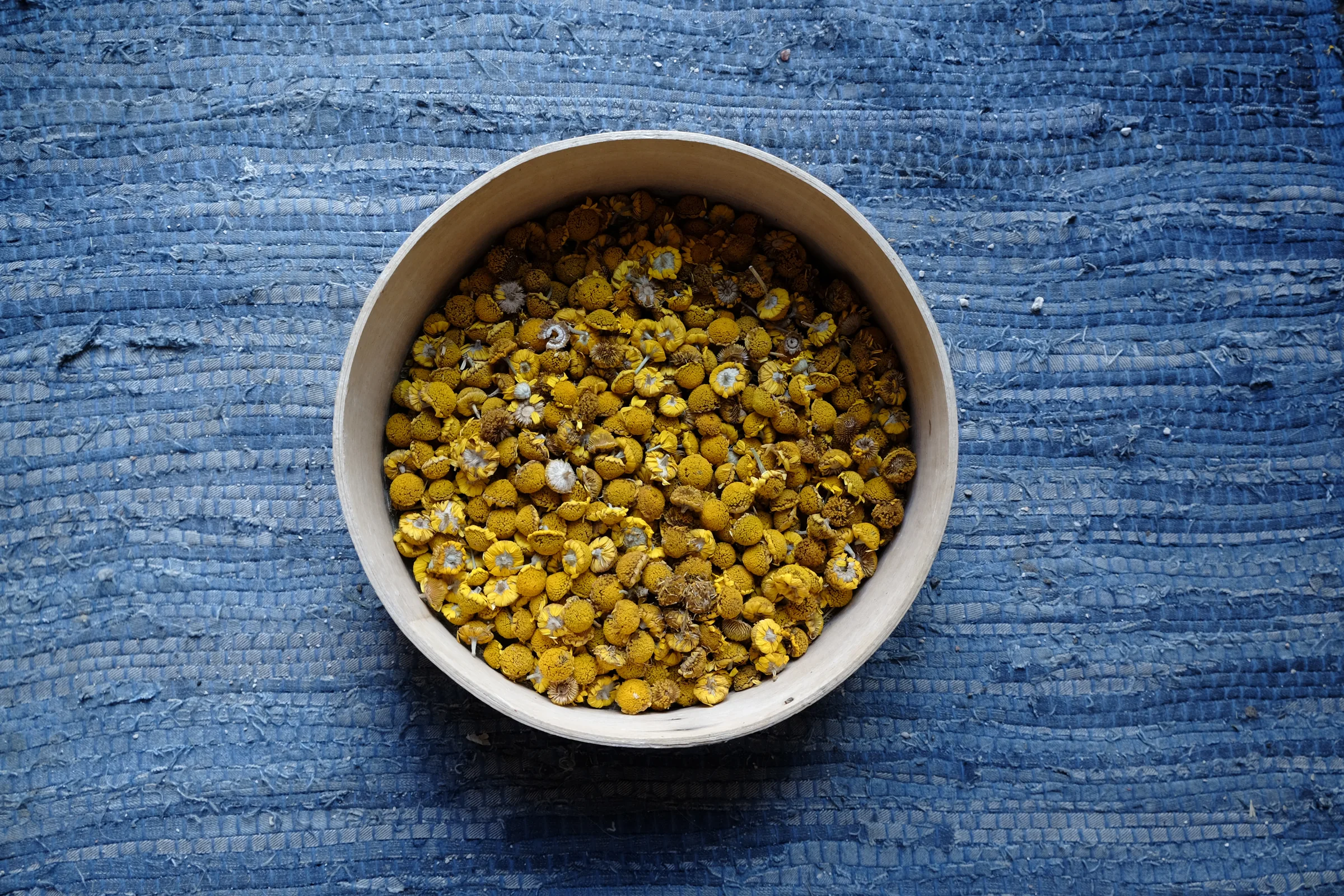
A bowl of dried chamomile flowers on a blue fabric

The project

Heritage passes through people

In 2018, two years after the earthquake that struck central Italy, Mattia Gaido gathered stories and images in Amatrice and the surrounding area, in collaboration with Caritas Diocesana di Rieti.

The starting point was what the inhabitants knew: a craft learned by watching, a technique handed down, an archive built over time. The earthquake runs through these testimonies, but the story mostly follows what people wanted to share about their culture and their work.

La fonte della tessitura

In Campotosto, Assunta found her grandmother’s loom and chose to learn how to use it. To do so, she turned to the older women of the village.

Finding an object opened a path of learning. Assunta looked into the memories of the women of Campotosto for the techniques of local weaving, going back to gestures that risked no longer being practised.

Learning took time, closeness and shared work. The older women became her teachers: through them, the use of the loom and the knowledge of fabrics found a new continuity.

At the time of filming, Assunta worked in the small wooden workshop “La fonte della tessitura”. The loom, which had survived the earthquake, was back at the centre of her daily work.

One place, many memories

Weaving in Campotosto is one of the stories gathered for Fidelis Amatrix. The research also met the making of pecorino amatriciano, local food shops and local history archives: different activities and collections, linked by the relationship between knowledge, work and belonging to a place.

Craft knowledge

Assunta’s loom and what she learned from the older women of Campotosto show how a practice can pass from one generation to the next through shared work.

Food culture

The testimonies gathered between cheese making and food shops convey the bond between land, techniques and daily life: from pecorino to gnocchi ricci and guanciale.

Archives and local memory

Photographs, publications, documents and stories kept by the inhabitants open a view onto the history of the area and the places the community values.

Photographs to look at, voices to listen to

Fidelis Amatrix was conceived as a multimedia documentation project. Photographs, video, recordings and texts are meant to build paths of discovery in which viewers choose where to linger.

Assunta’s story was developed as a pilot interactive path: alongside her account are images of the workshop, details of the tools and sections on weaving. The original screenshots show how these materials were connected.

How the documentary is built

From the opening you choose a theme or a place on the map. Each theme gathers its own chapters: Assunta’s story, developed as the pilot path, unfolds in three steps.

by themeby placeOpeninginstructions and startThemesthree to choose fromMapAmatrice, hamlets, CampotostoCraft knowledgeFood cultureHistorical heritageLa fonte della tessituraAssunta’s story, the pilot pathStoryVideoWorkshopLuciana’s archivelocal guideGlimpses of the pasthistorical publicationsOpeninginstructions and startThemesby themeMapby placeCraft knowledgeLa fonte della tessituraAssunta’s story, the pilot pathStoryVideoWorkshopFood cultureHistorical heritageLuciana’s archivelocal guideGlimpses of the pasthistorical publications
The pilot path is in indigo. The dashed line is the way in from the map, which leads to the same stories.

Inside the gesture

Preparing the threads, setting them on the loom, passing the shuttle, watching the weave take shape. The photographs move close to the tools and the material to show the work behind every fabric. Alongside weaving, Assunta’s story introduces the knowledge of natural dyeing.
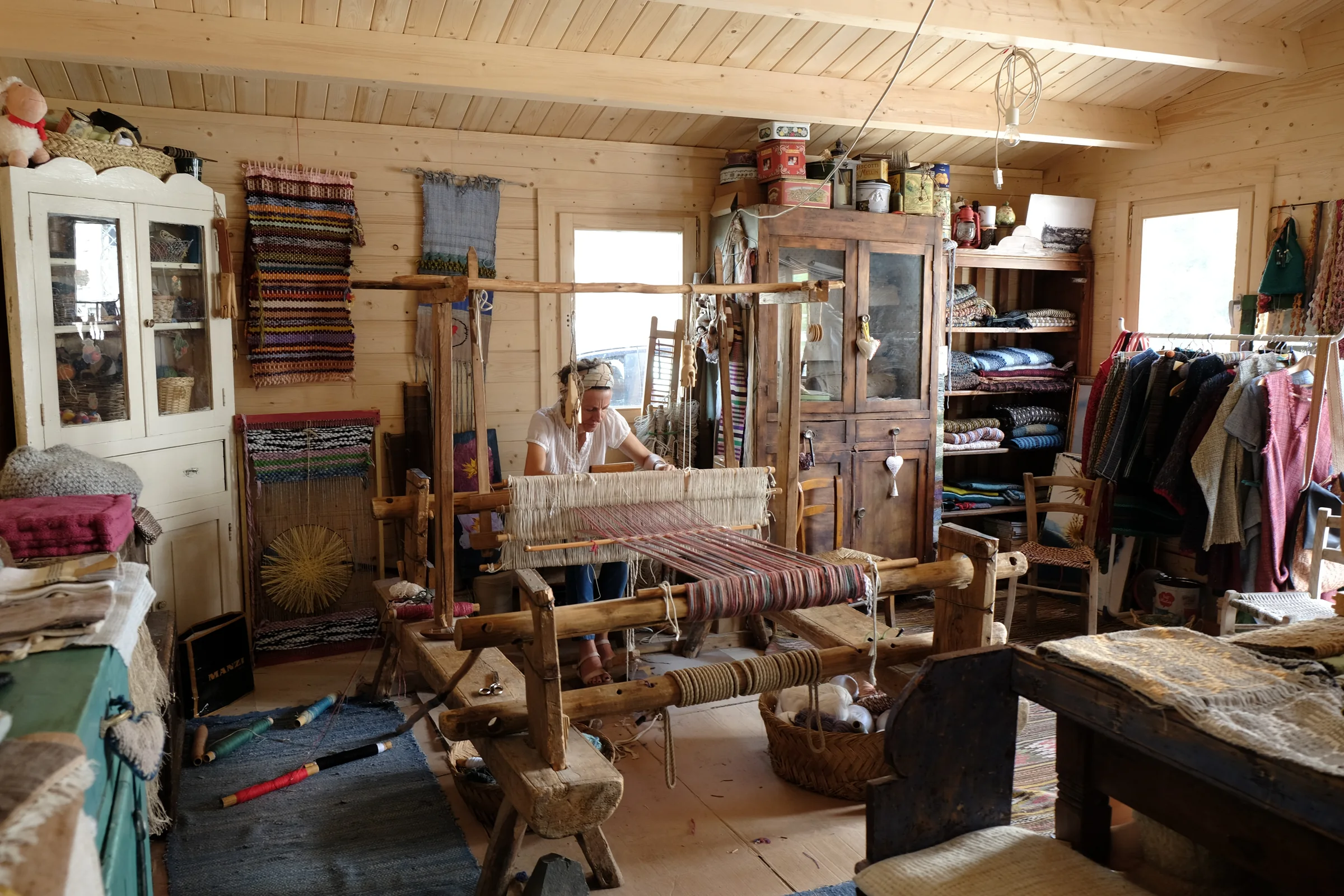
Assunta seated at the wooden loom, surrounded by fabrics and tools in her workshop
Assunta weaves on her grandmother’s loom, found in a cellar. To learn how to use it she spent whole days with the older women of Campotosto, piecing together a tradition handed down by word of mouth in the Monti della Laga.
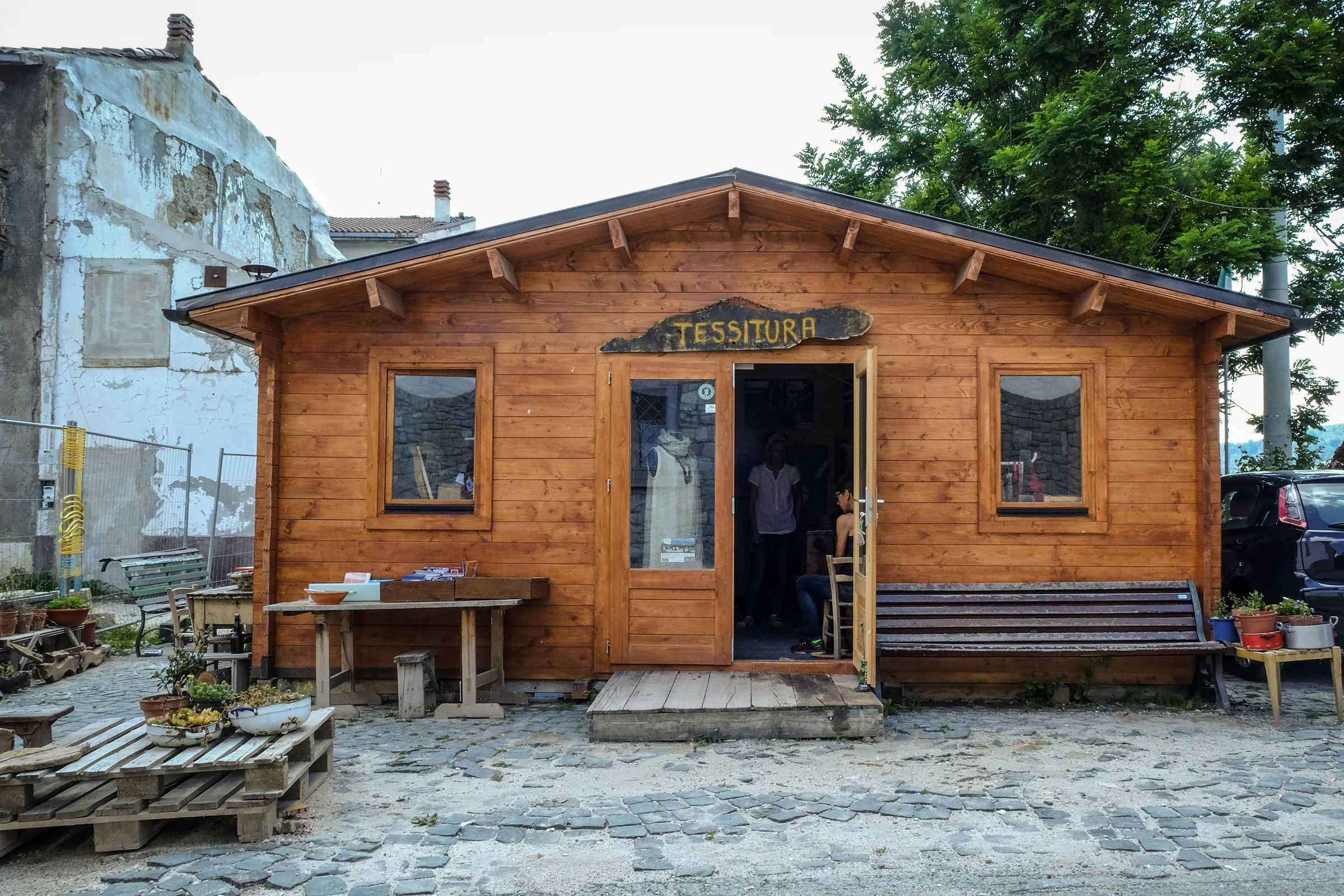
The wooden workshop with its weaving sign and the door open
“La fonte della tessitura”, Campotosto. After the earthquake of 30 October 2016, the strongest felt in the village, Assunta moved her workshop here: a wooden cabin in the village centre, originally a tourist information point.
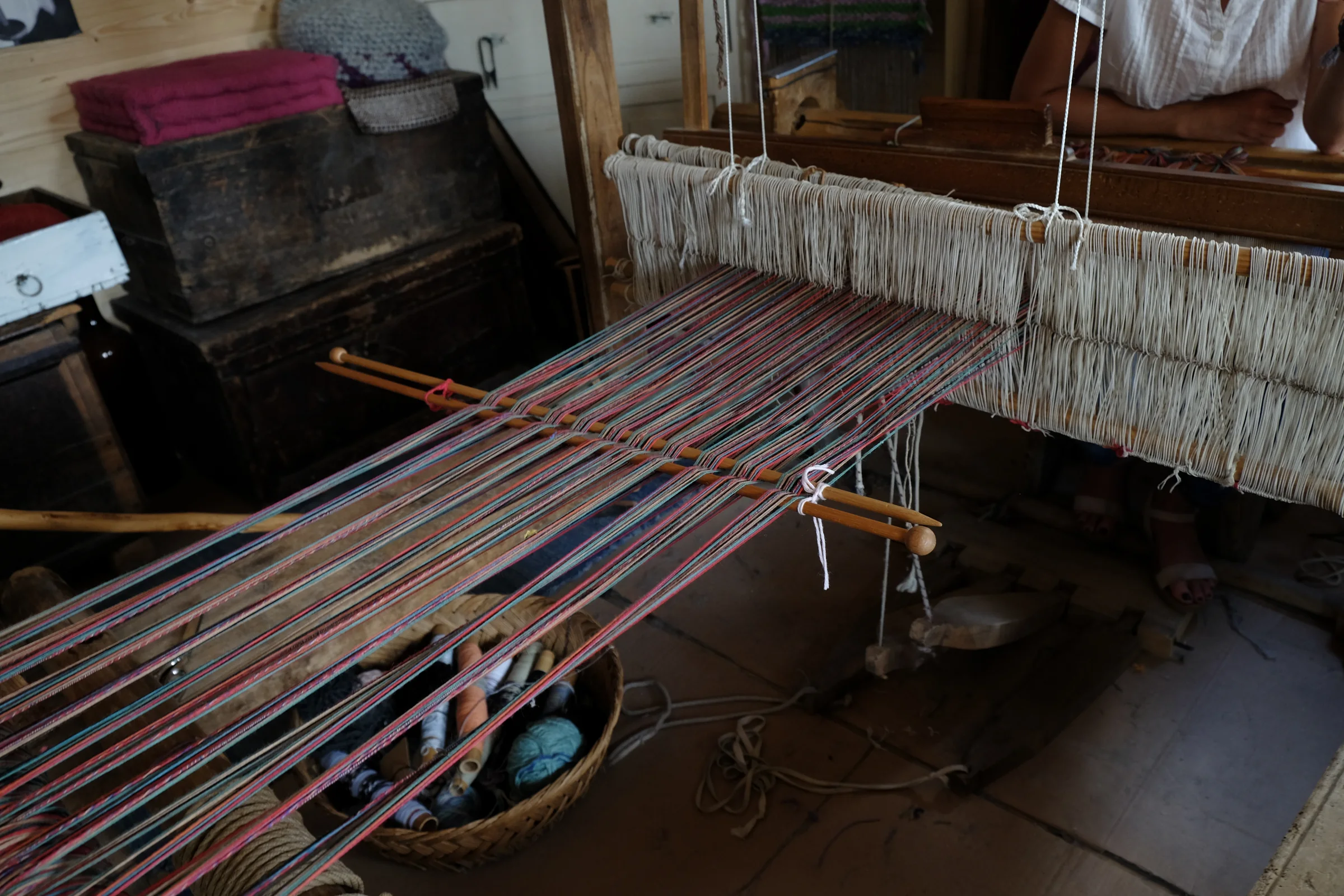
Coloured threads stretched on the wooden loom in Assunta’s workshop
Every cloth needs a precise number of threads. Before starting, each one is passed between the beams of the loom, stretched and tied to the opposite end through the two reeds.
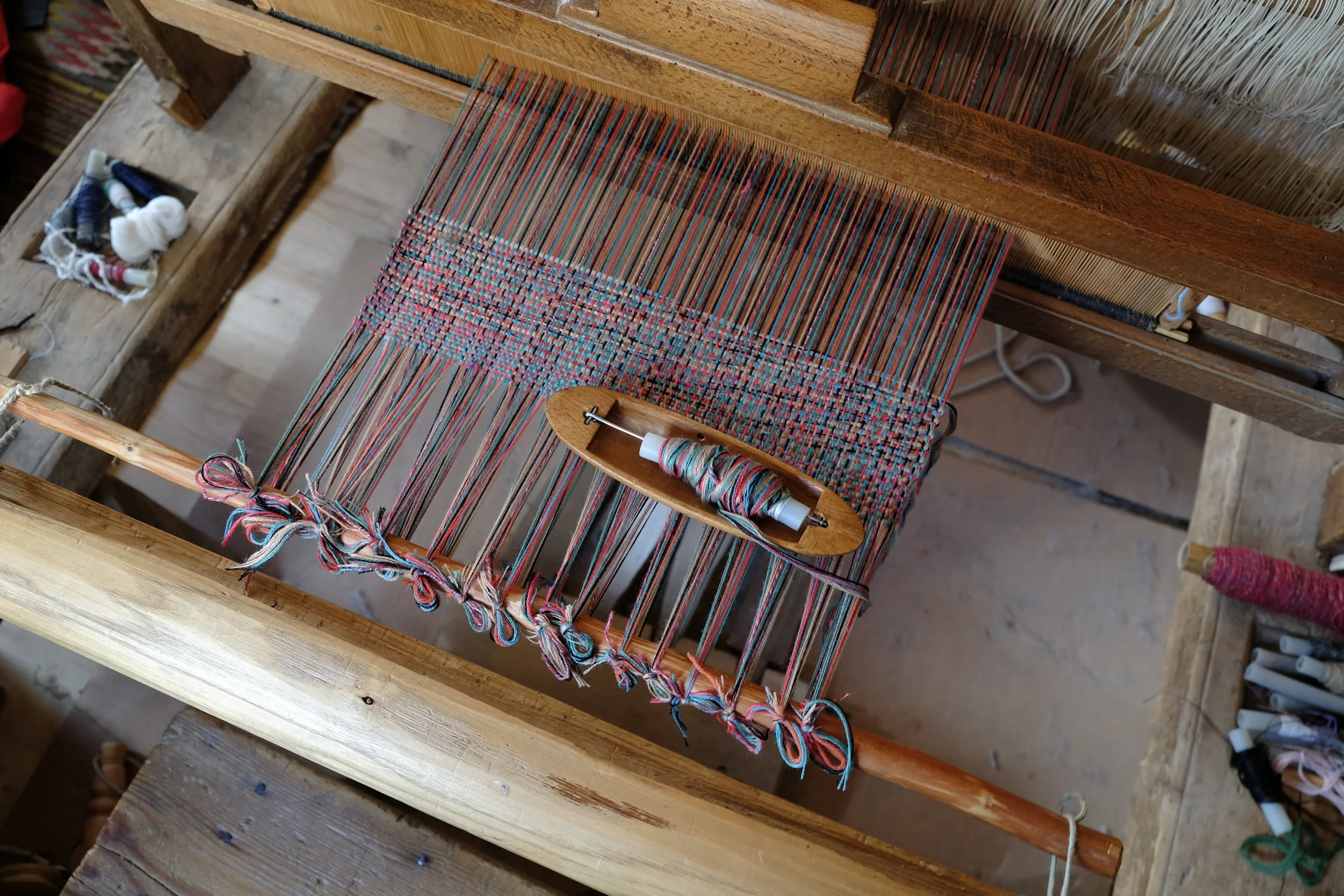
A wooden shuttle resting among the threads of a red, blue and green fabric
The shuttle passes between two sets of stretched threads. Each time the pedals are pressed the two sets swap places and lock in the thread just passed.
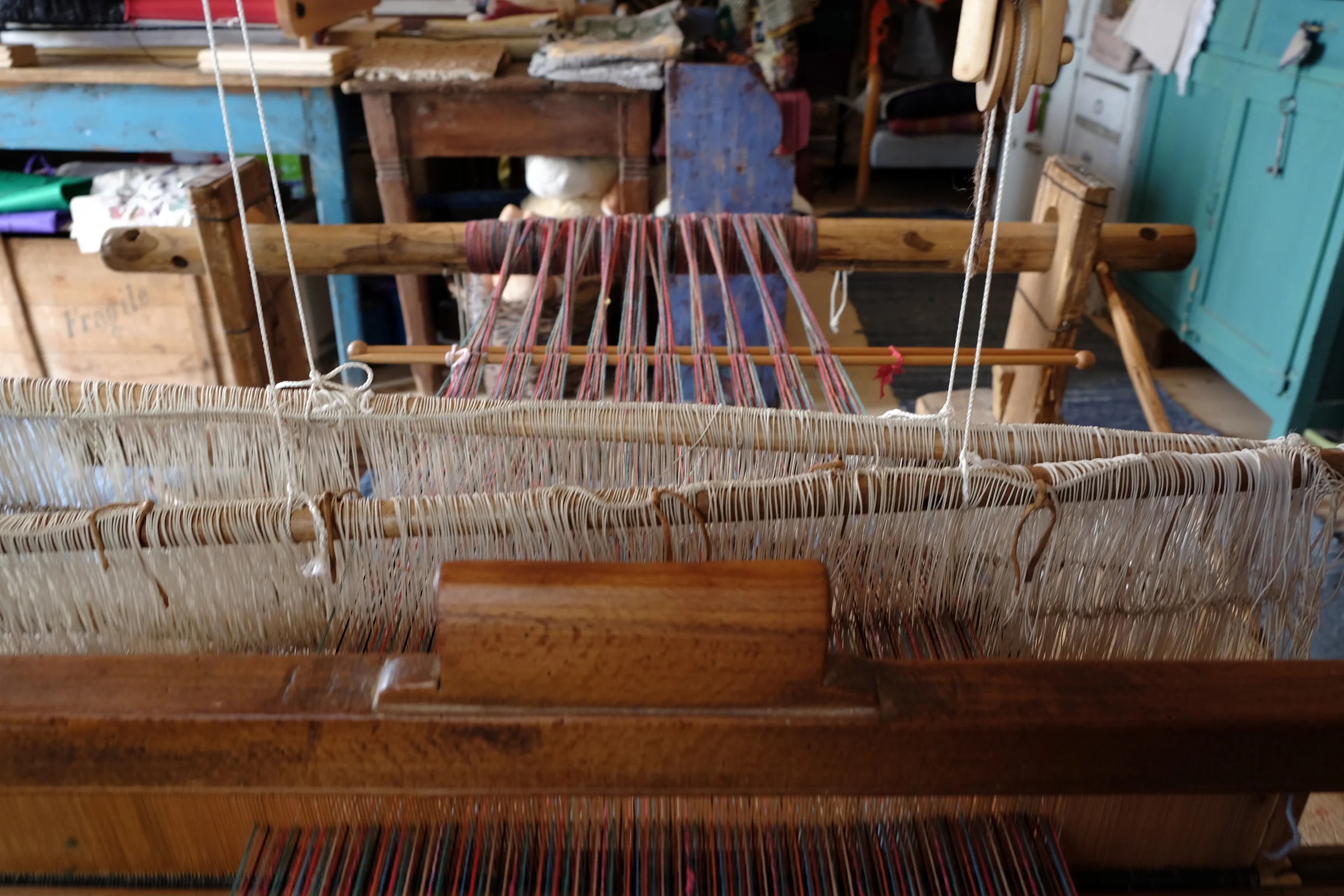
The loom’s reed and the white warp threads, seen from the weaver’s seat
The loom seen from the weaver’s seat. The white warp threads run through the two reeds, which divide them into two parallel sets.
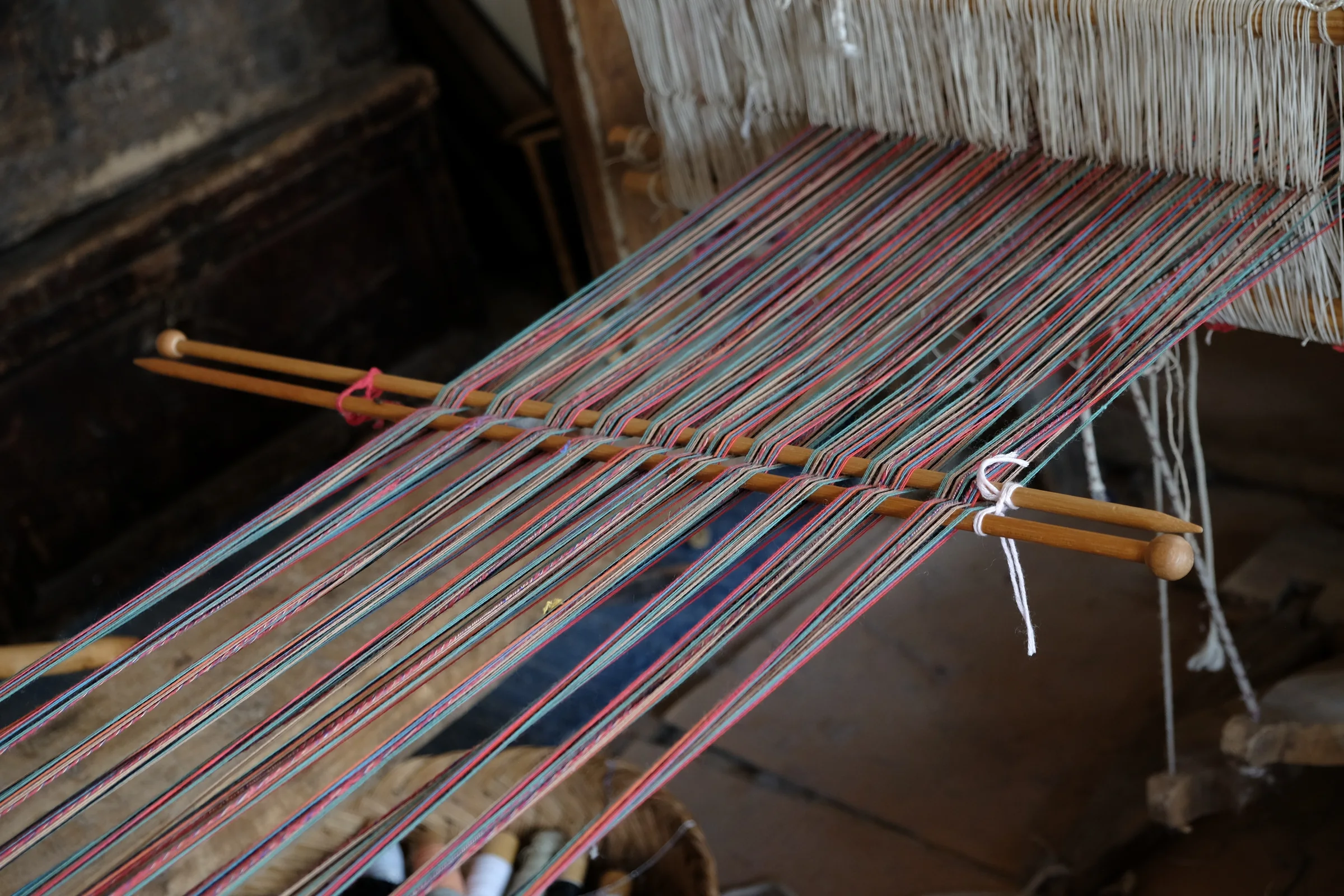
Red, blue and green threads separated by two wooden rods
The first knots tie the threads to the beams of the loom. “While I was learning, the older women always told me off for making my knots too big,” Assunta recalled.
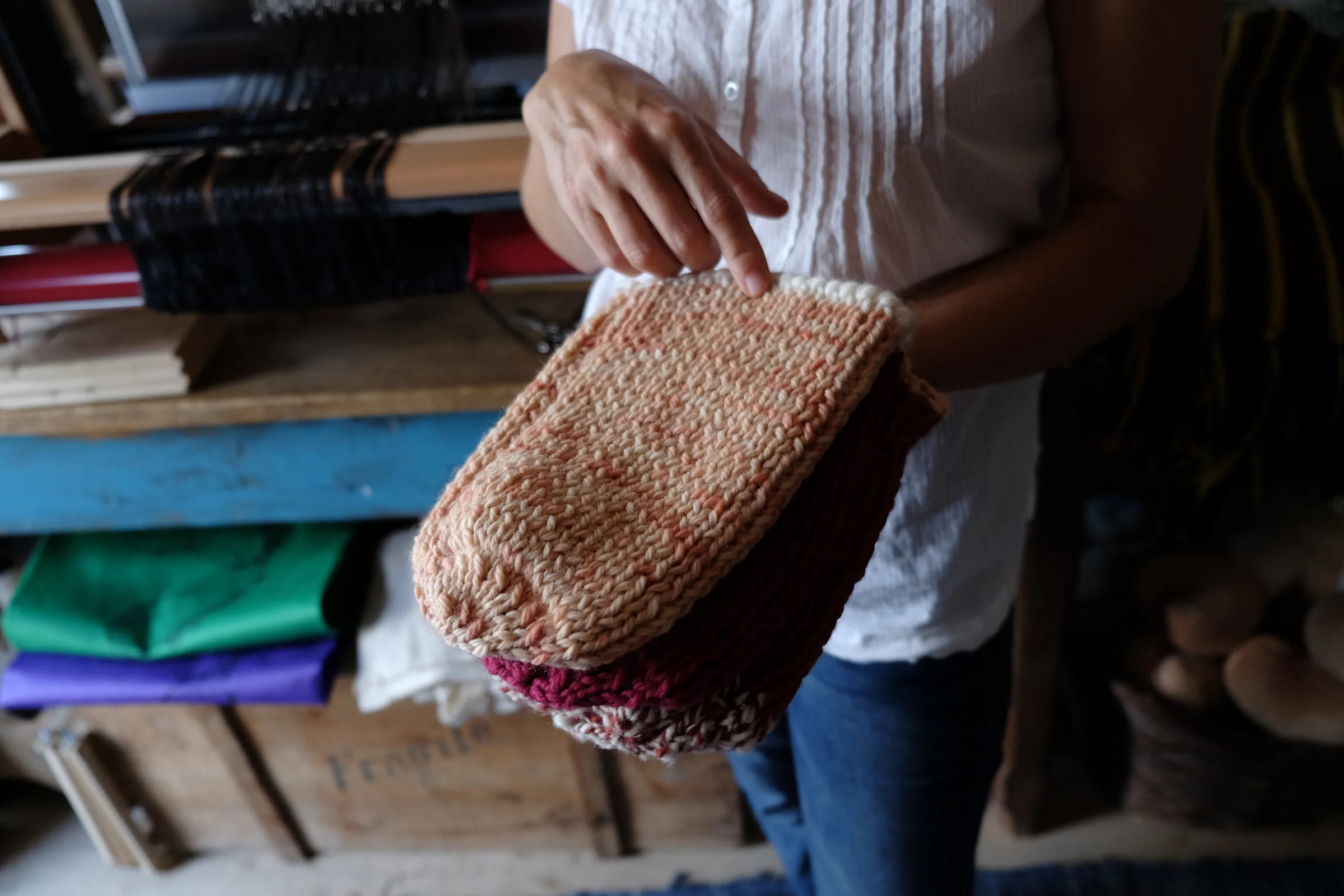
Assunta’s hands showing a hat of dyed wool
A woollen hat dyed by Assunta with a natural process, using pigments from the Monti della Laga.
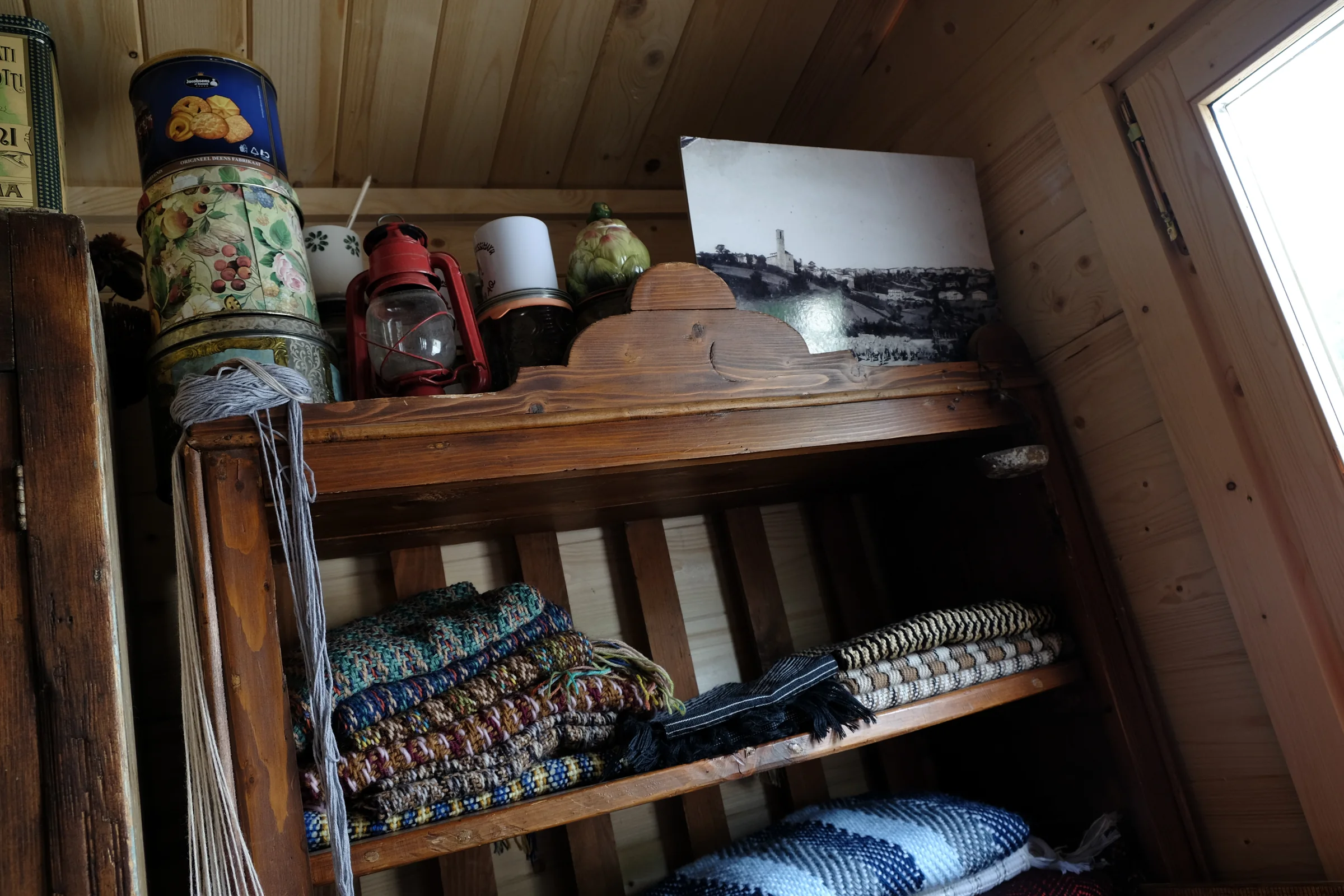
Folded fabrics on wooden shelves
Cloths and samples on the workshop shelves. After the earthquake fewer passing customers came by, but Assunta had chosen not to sell online.
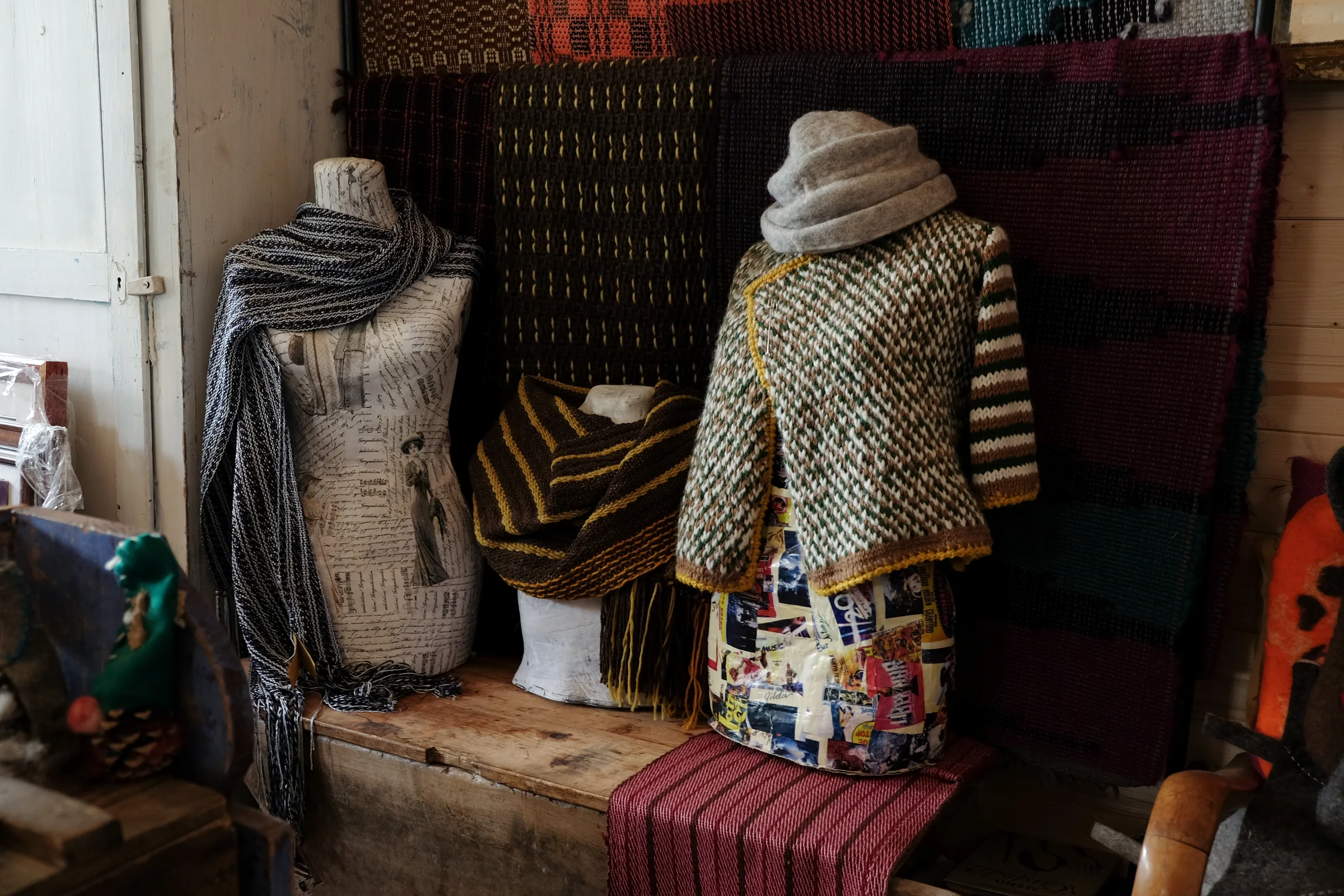
Scarves and a woollen cape on three dress forms, in front of woven cloths
Scarves and a cape on the workshop’s dress forms. Every piece was dyed naturally, by Assunta or with a specialist dyer.

Food culture

The testimonies gathered between cheese making and food shops convey the bond between land, techniques and daily life. Here, pecorino being made between the dairy and the home kitchen.
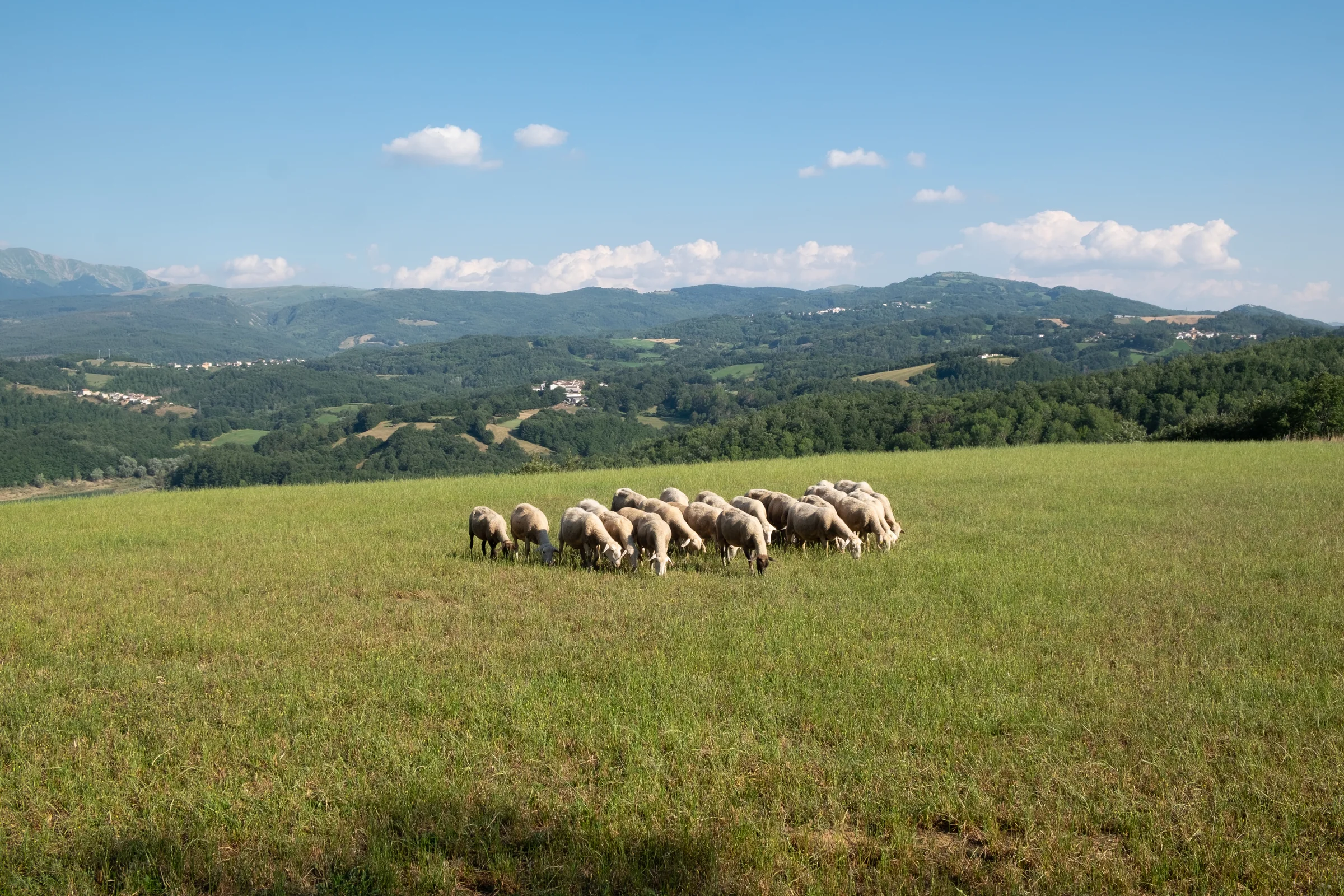
A flock of sheep grazing on the hills of Santa Giusta
Sheep grazing at Santa Giusta, one of the roughly 70 hamlets of the municipality of Amatrice, where daily life has been tied to herding for centuries.
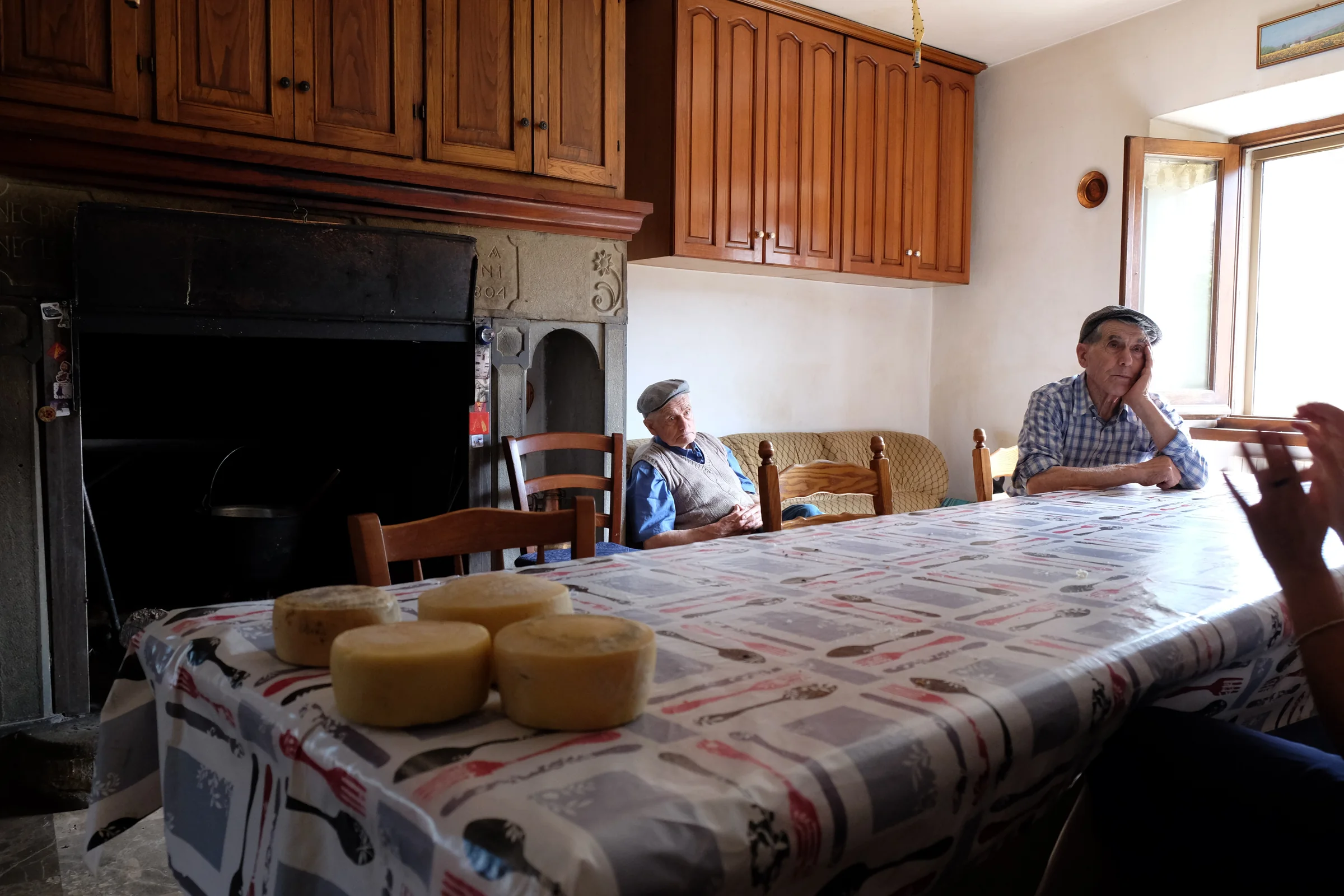
A kitchen with cheese wheels on the table and two men sitting by the fireplace
Cheese wheels in the family kitchen of the Caseificio Amatriciano in Santa Giusta, founded almost half a century earlier and handed down through the generations.
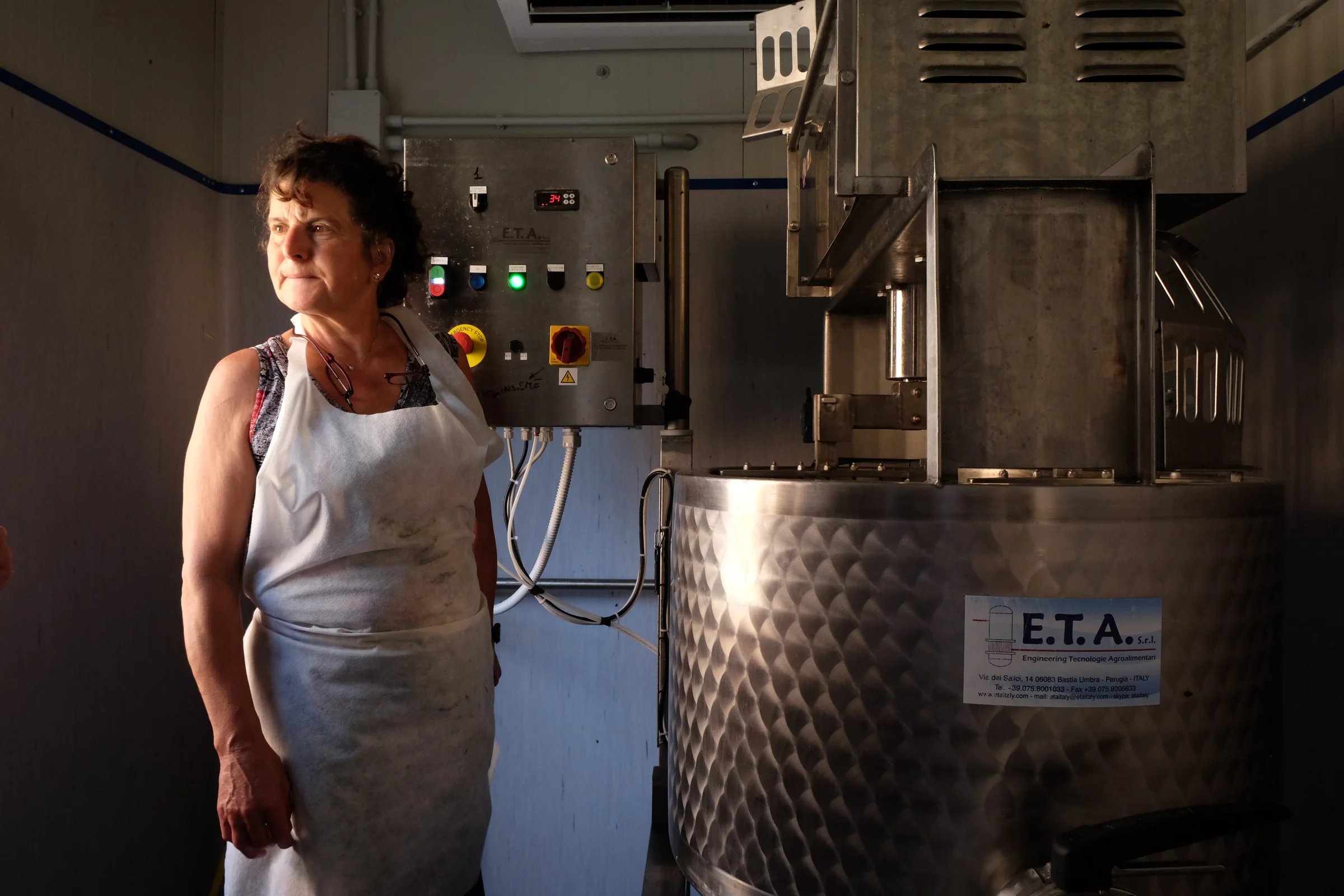
A cheesemaker in an apron next to the milk vat in the dairy
The earthquake had made the dairy unusable. The family moved the machinery into a container, so as not to lose their permits and to resume production.
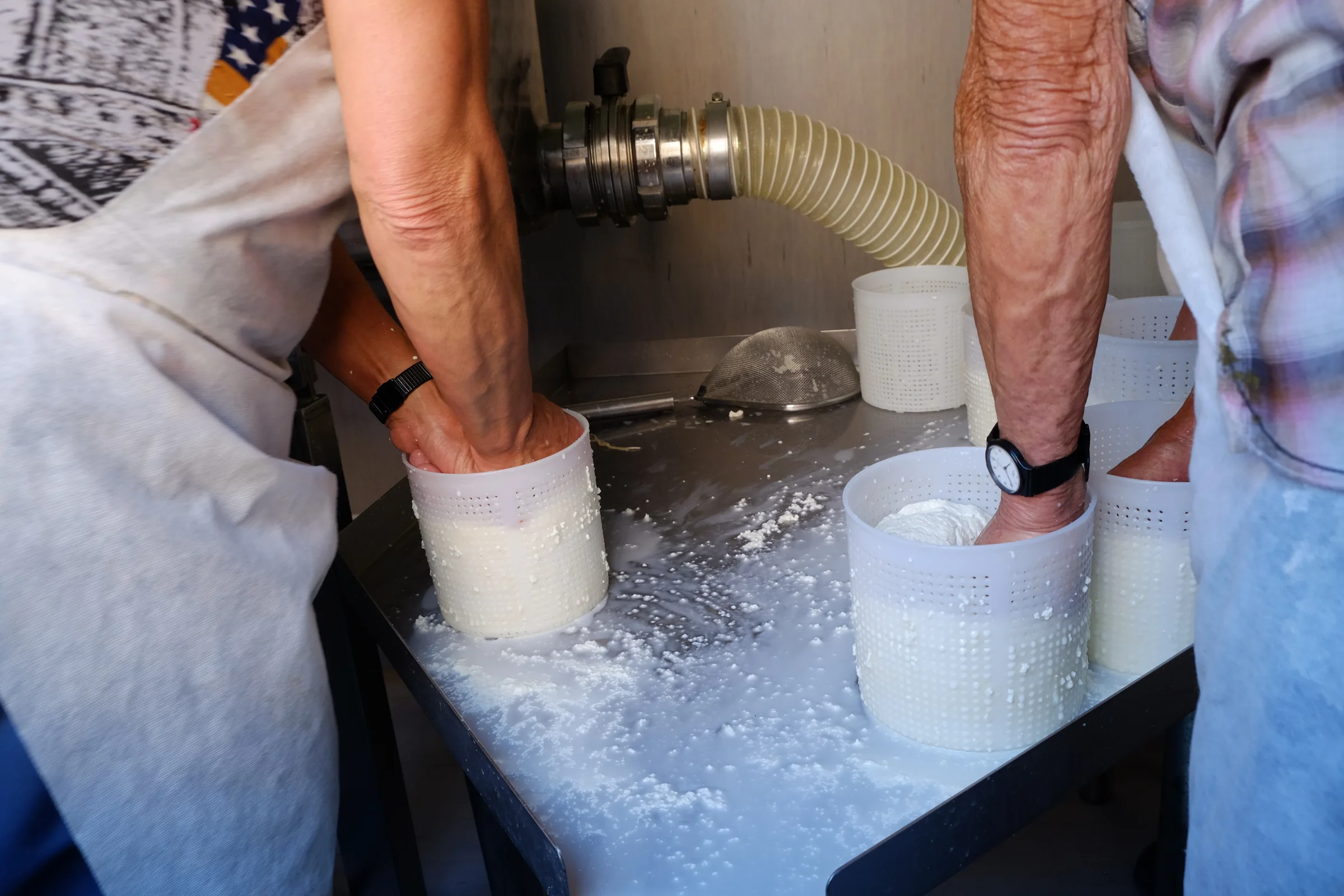
Hands placing ricotta in the moulds
Goat’s milk ricotta placed by hand in the moulds. Two generations of women in the family looked after the milking of the goats.
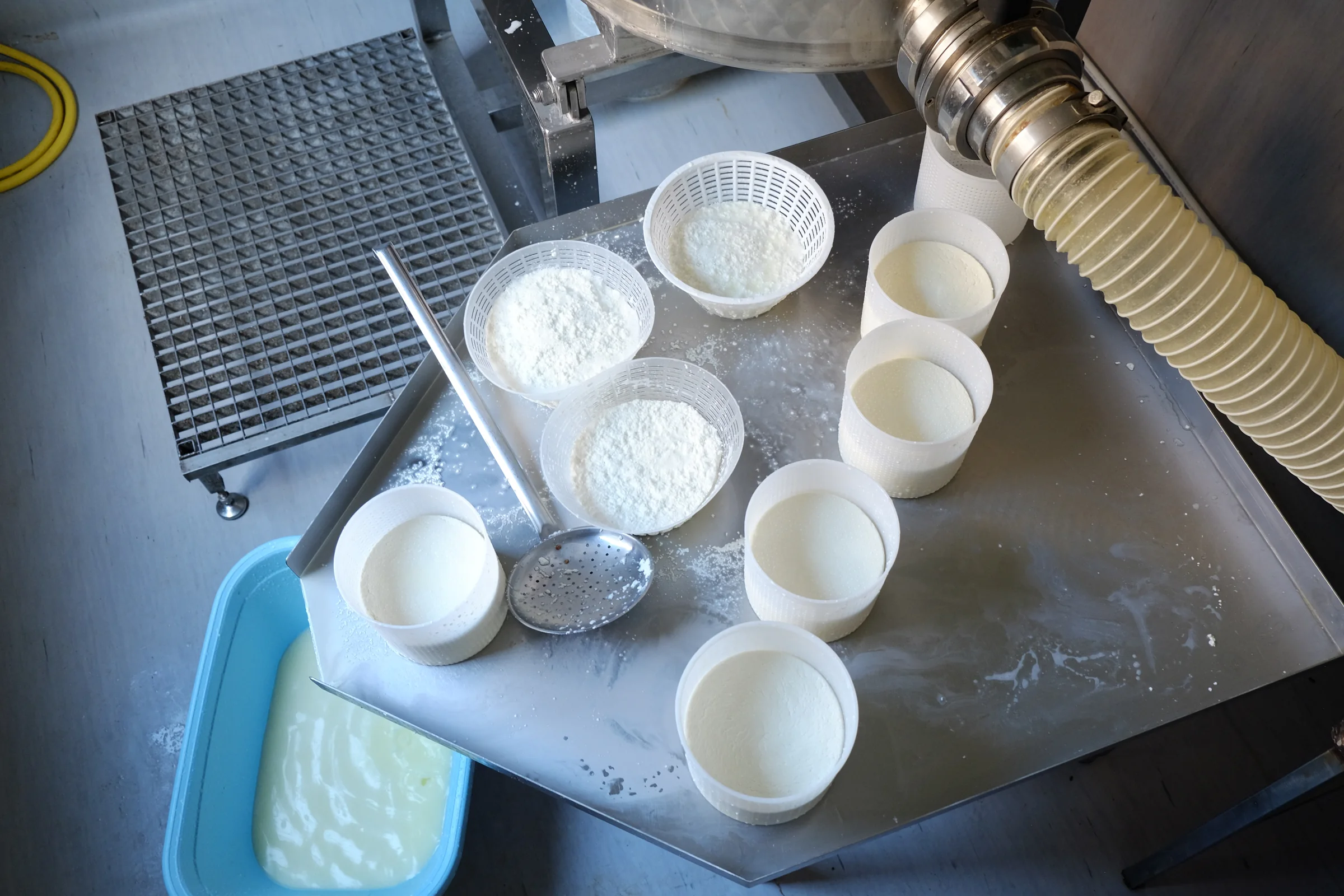
Freshly filled moulds of goat’s milk ricotta on a steel counter, seen from above
Freshly filled moulds of goat’s milk ricotta.
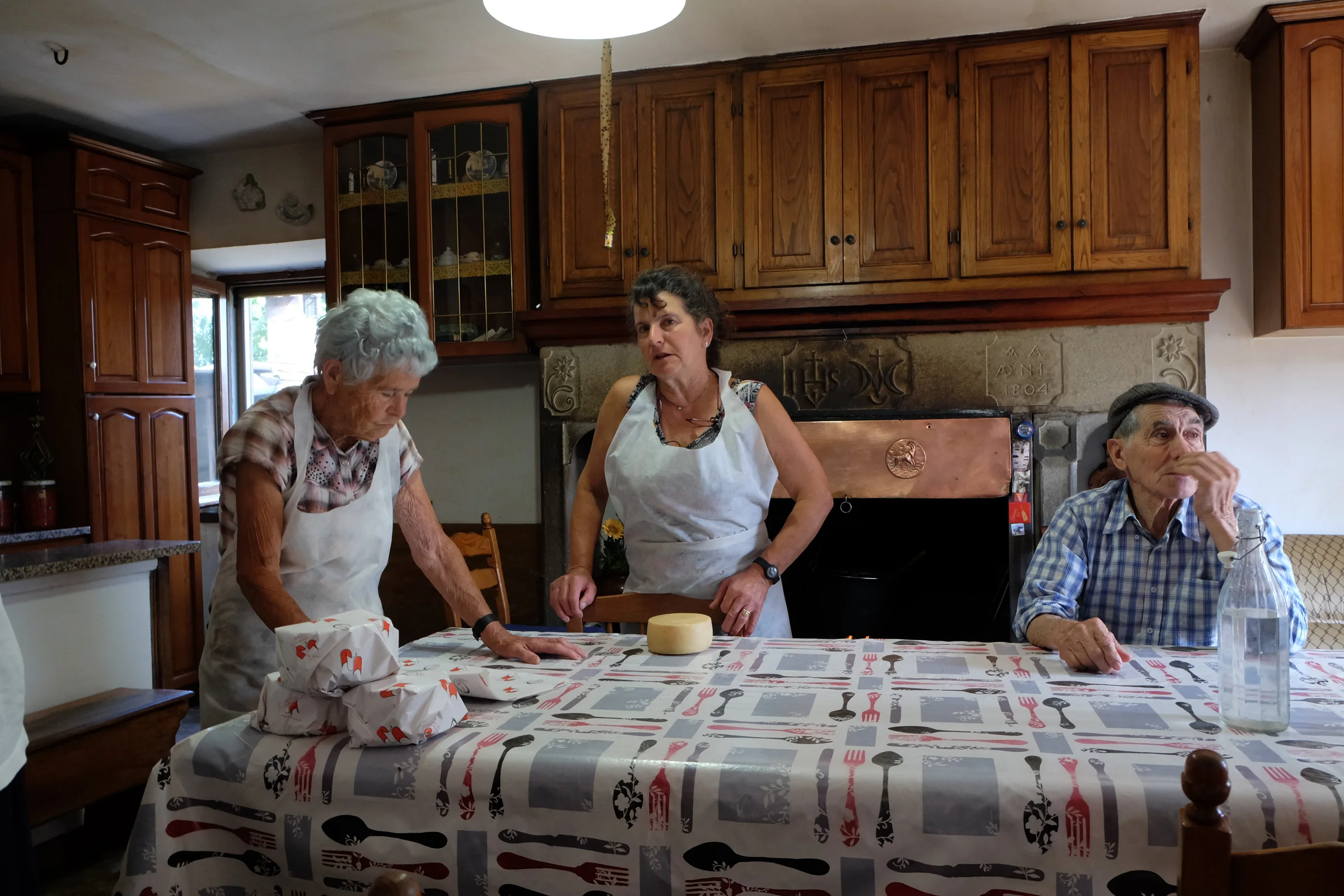
Two women and a man in the home kitchen, around the table
Before the earthquake the dairy had many customers outside the area, including restaurants in Rome. After almost two years orders were coming back.
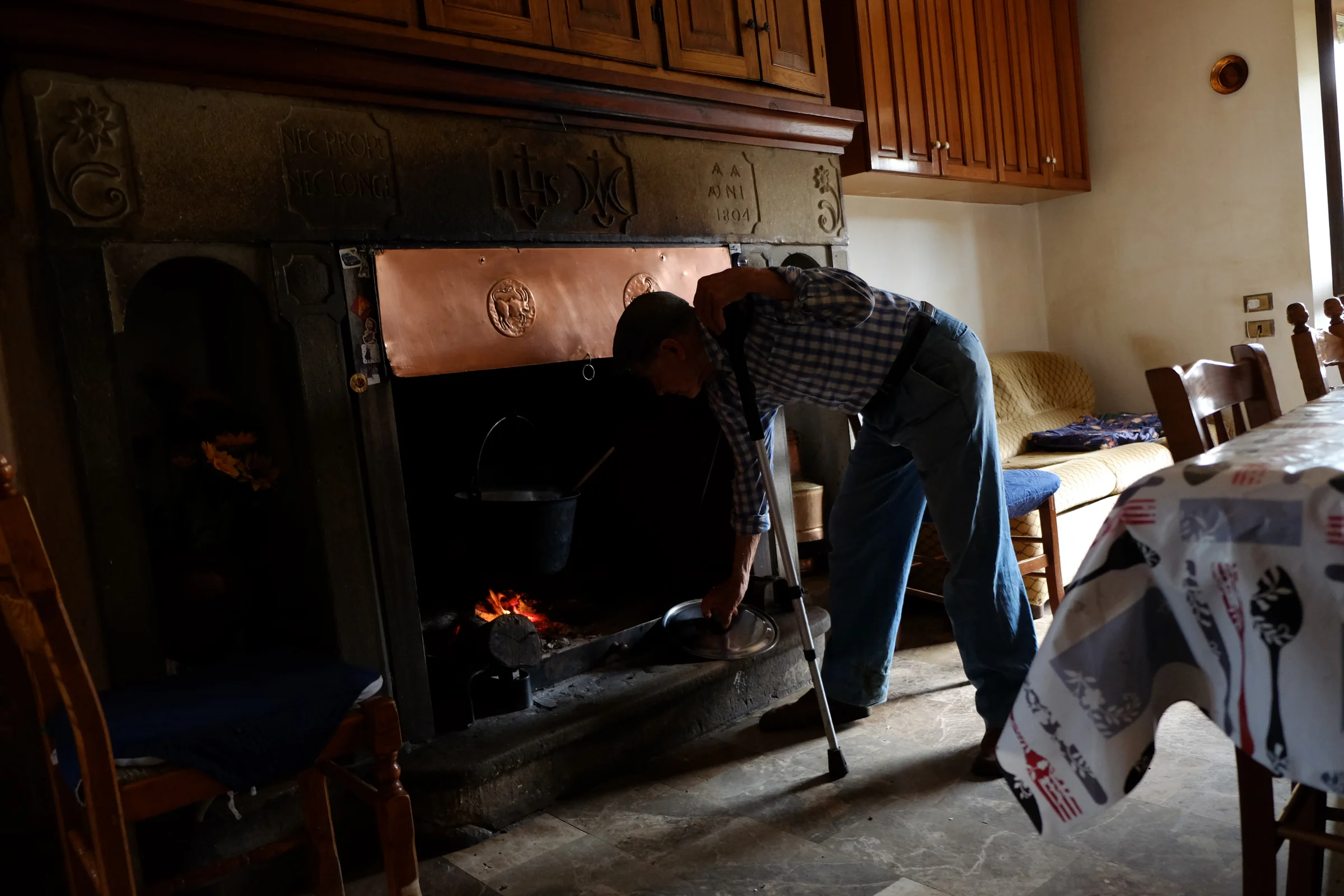
A man bending over the lit kitchen fireplace
The fire lit in the family kitchen. The stables had withstood the tremors, but moving the machinery halted production for several months.

The area in 2018

Two years after the earthquake, the villages were still marked by collapsed buildings and temporary structures. These images show the setting in which the testimonies were gathered.
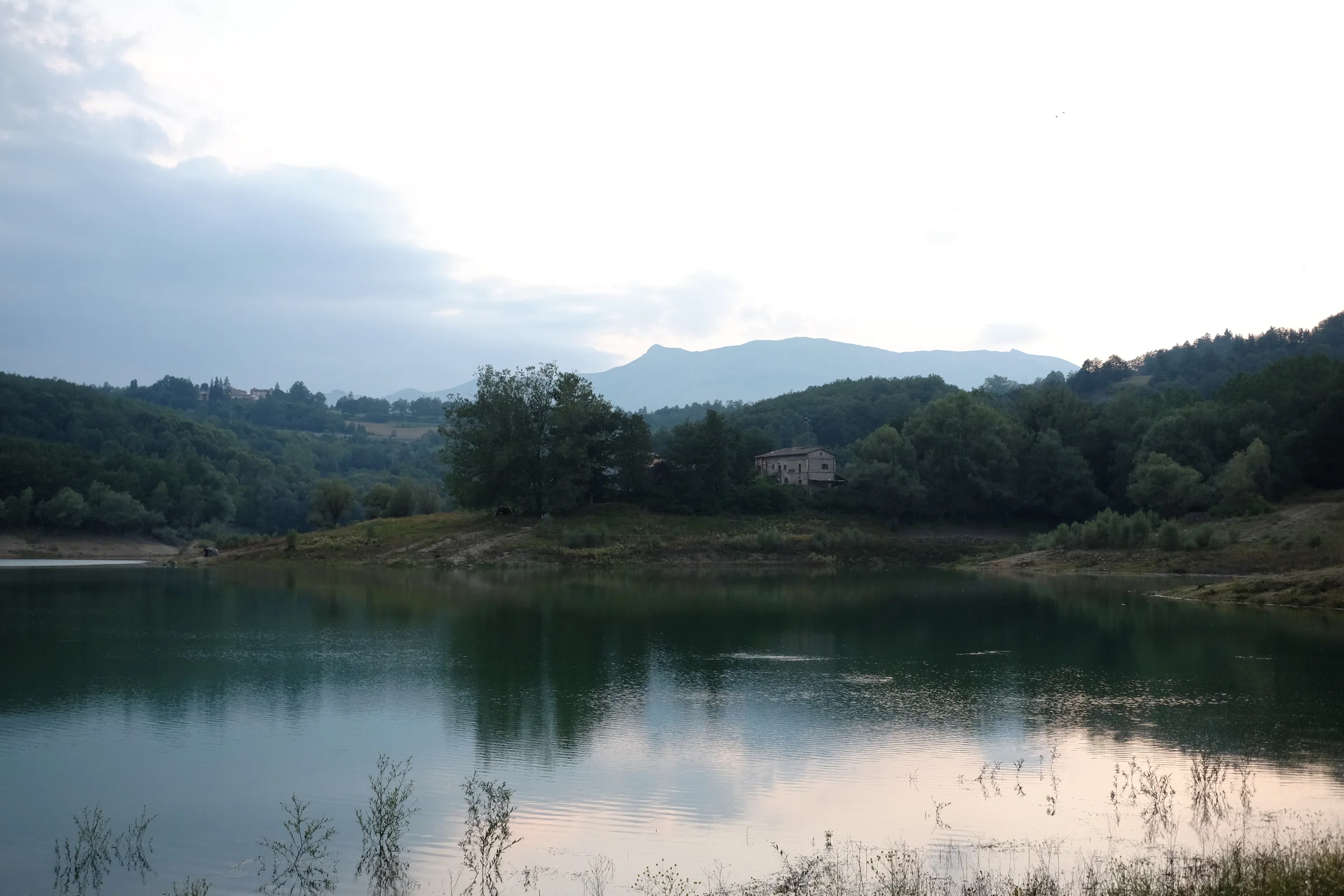
Lake Scandarello at dusk, with a house among the trees and mountains behind
Lake Scandarello at dusk, a few kilometres from Amatrice.
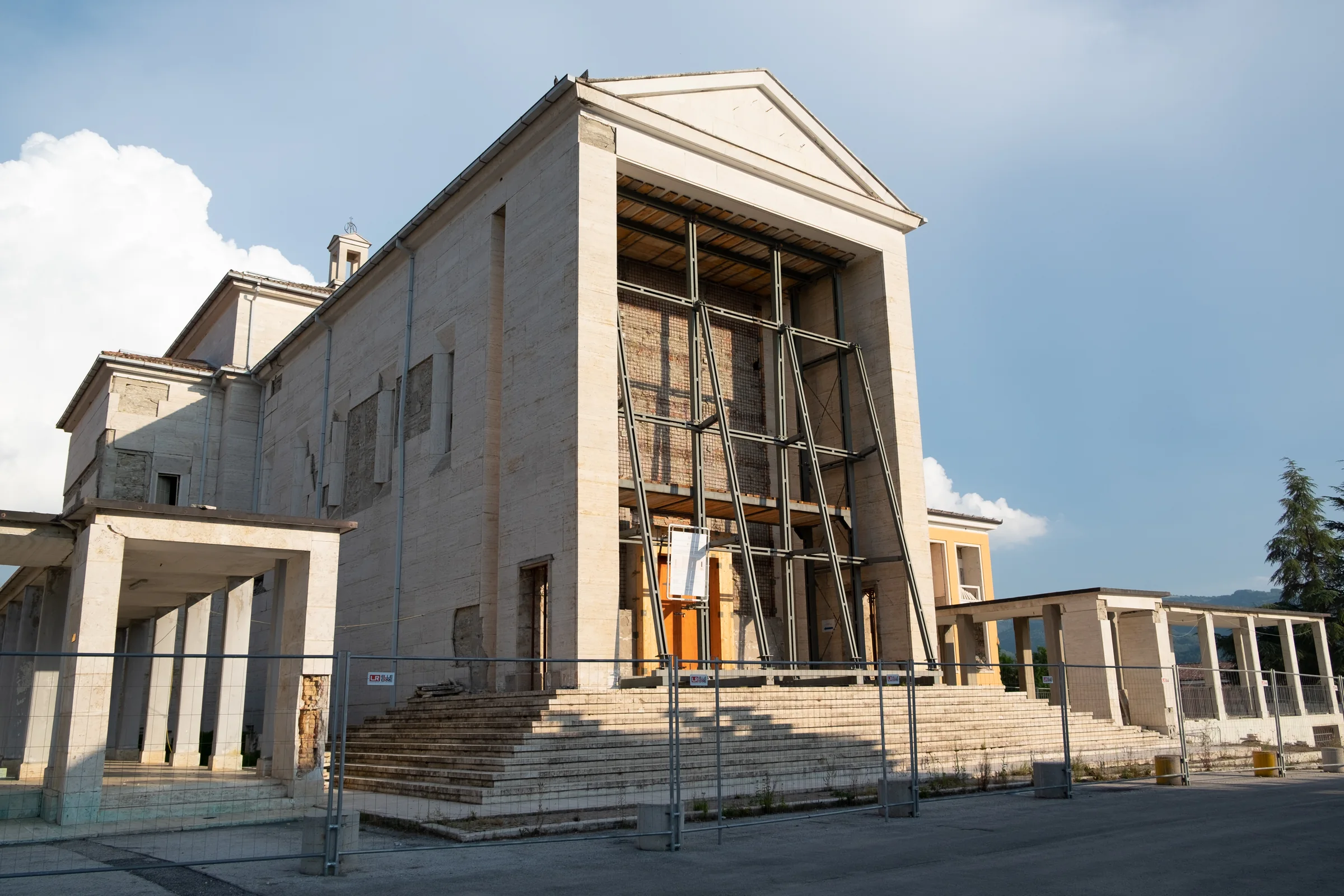
The church of the Don Minozzi religious centre with its façade held by a steel frame, behind barriers
The church of the Don Minozzi religious centre, miraculously still standing, made safe.
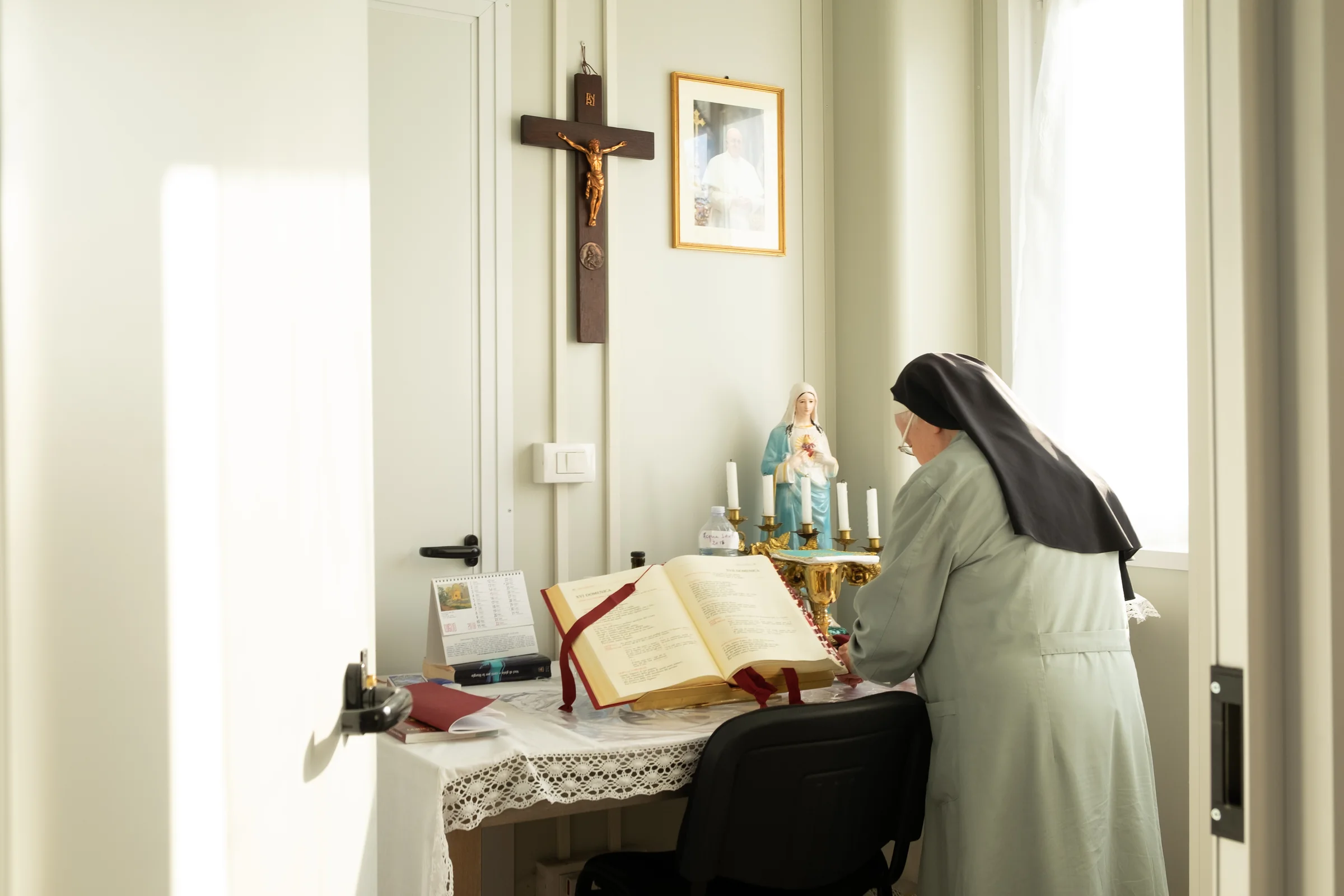
A nun preparing the missal on a simple altar, in a bright room
A nun prepares the missal in a temporary chapel. The safe grounds of the Don Minozzi complex, built in the 1930s, housed the Caritas centre, some offices and a first aid post.
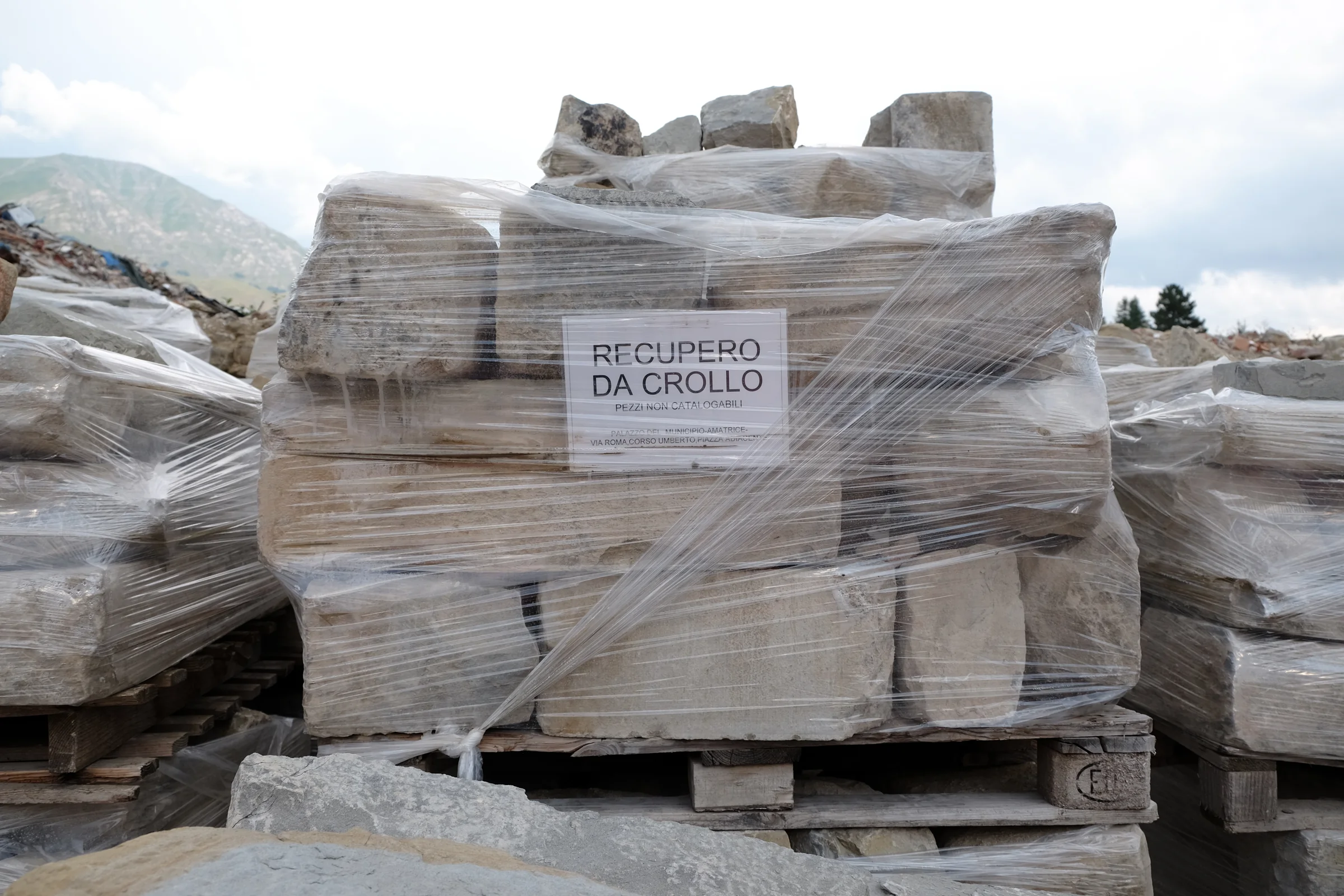
Pallets of stones wrapped in plastic with a sign reading Recupero da crollo
Stones recovered from the collapse of Amatrice’s town hall, wrapped on pallets under a sign reading “pieces that cannot be catalogued”.

The interactive documentary

The interactive documentary, built with Klynt: the opening, the choice of topics, the map, Assunta’s story and some chapters on historical heritage.
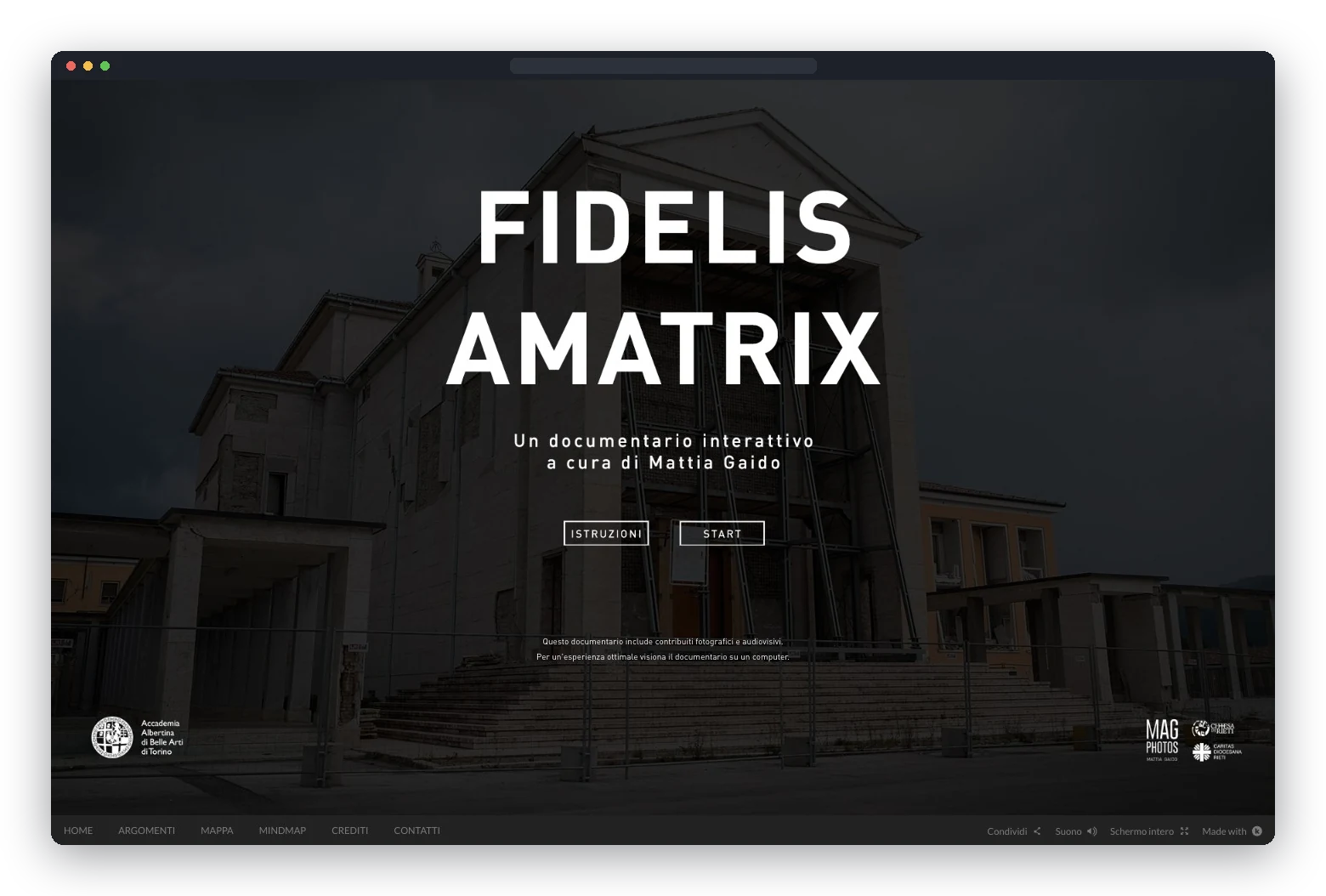
The opening screen of the Fidelis Amatrix interactive documentary
The opening of the documentary, with the instructions and the start of the story.
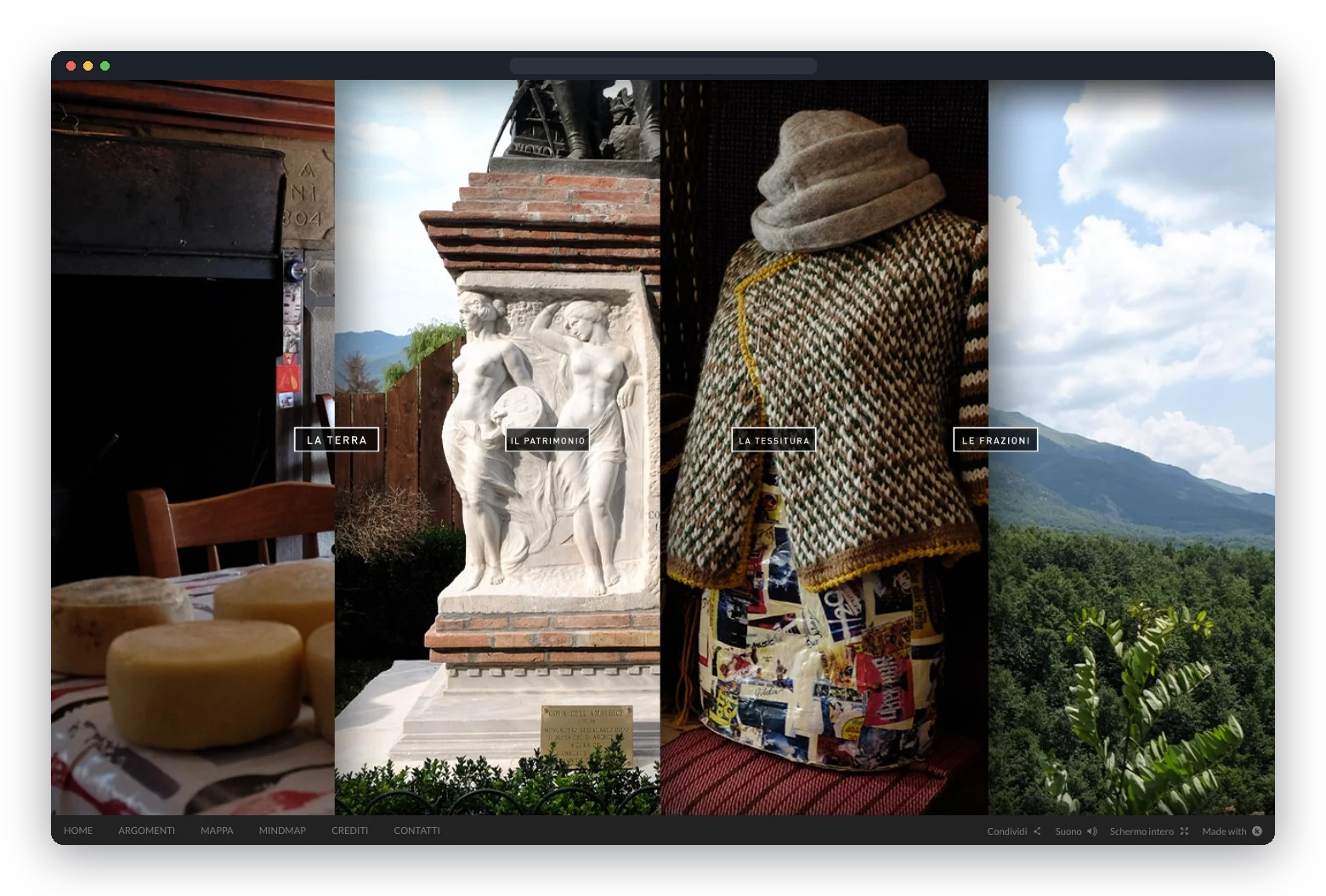
Screen of the interactive documentary with the choice of topics
The choice of topics: craft knowledge, food culture, historical heritage.
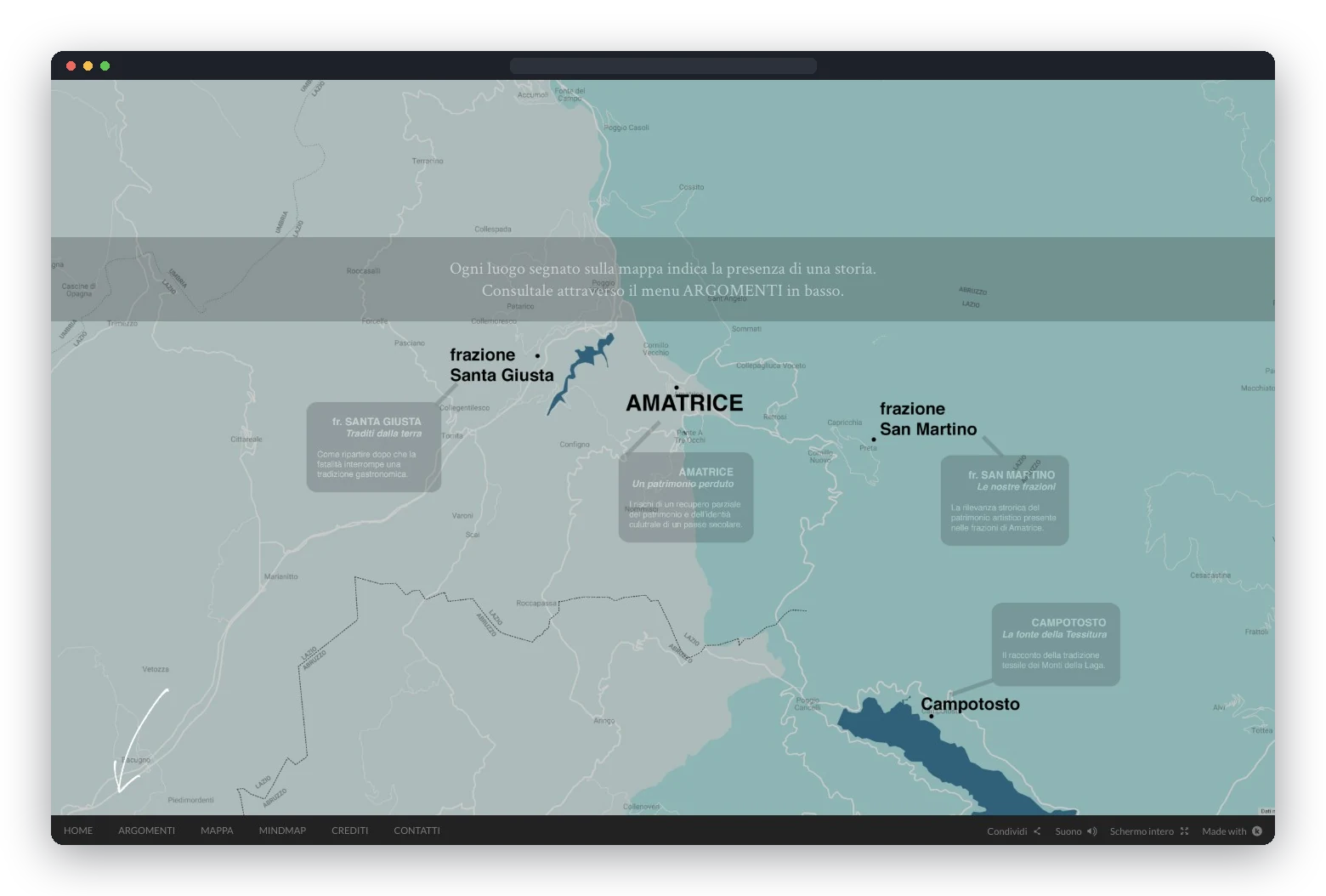
Screen of the interactive documentary with the map of places between Amatrice, its hamlets and Campotosto
The map of the places visited.
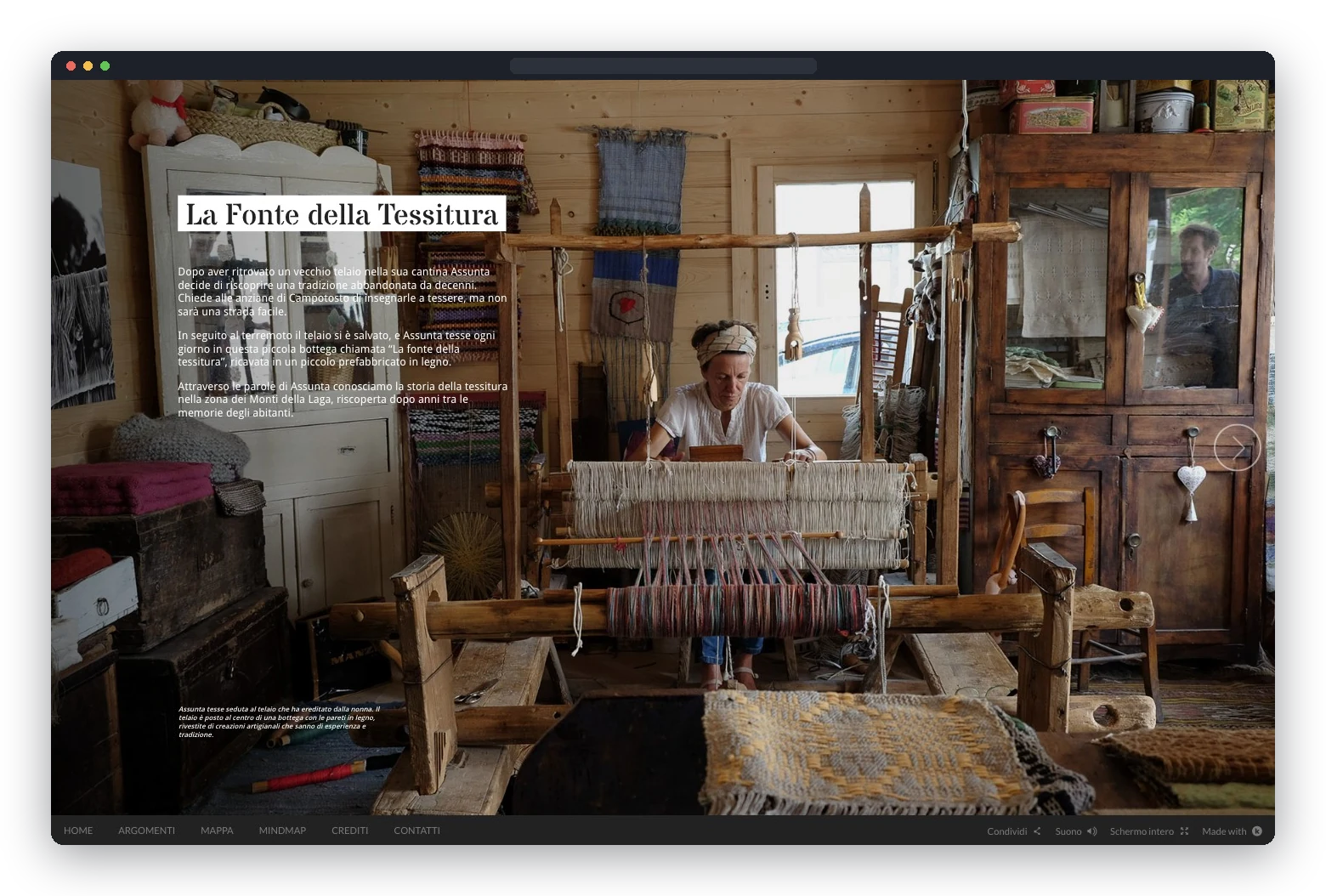
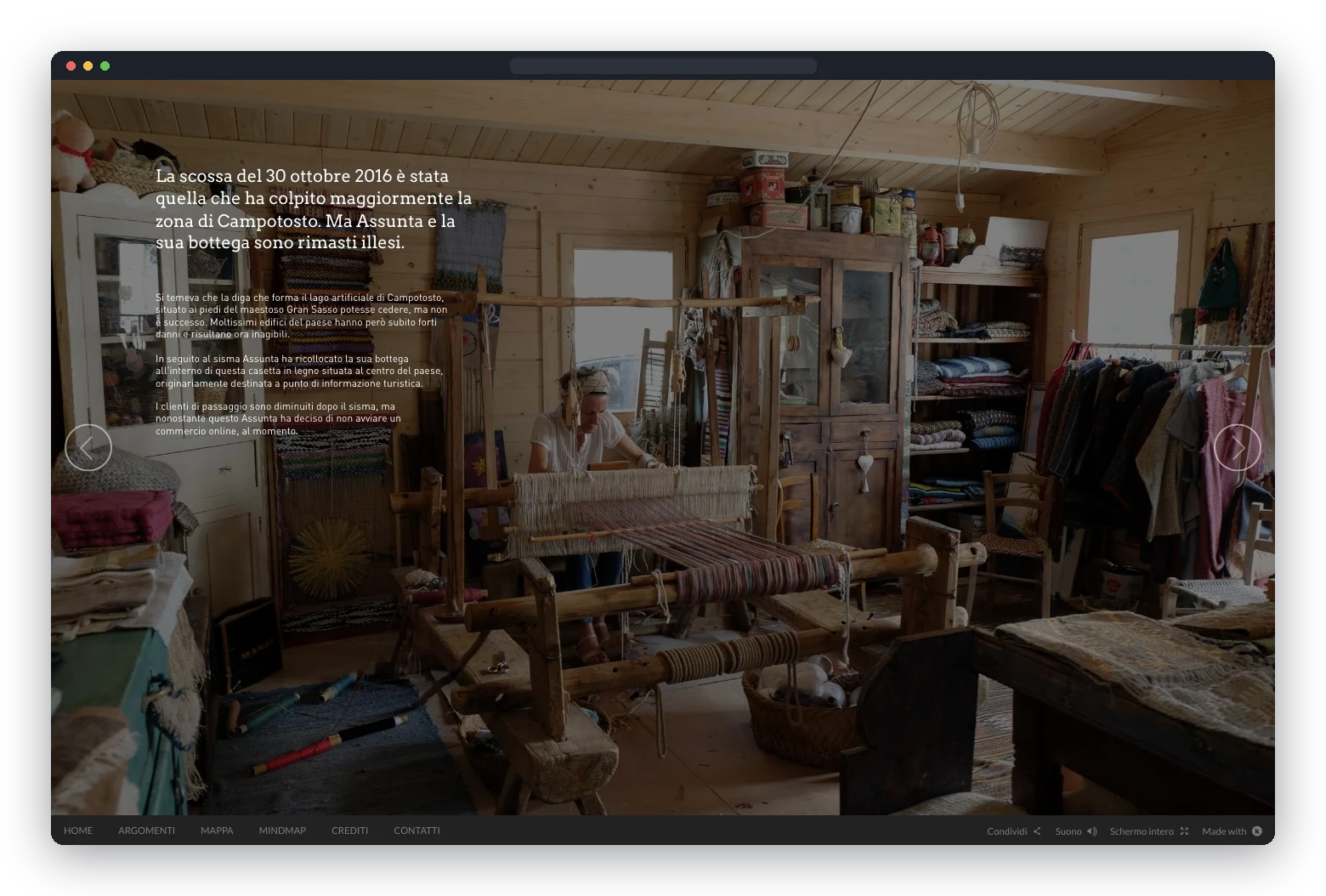
Screen of the interactive documentary: Assunta at the loom with the title La fonte della tessitura and the chapter text
The opening of Assunta’s story.
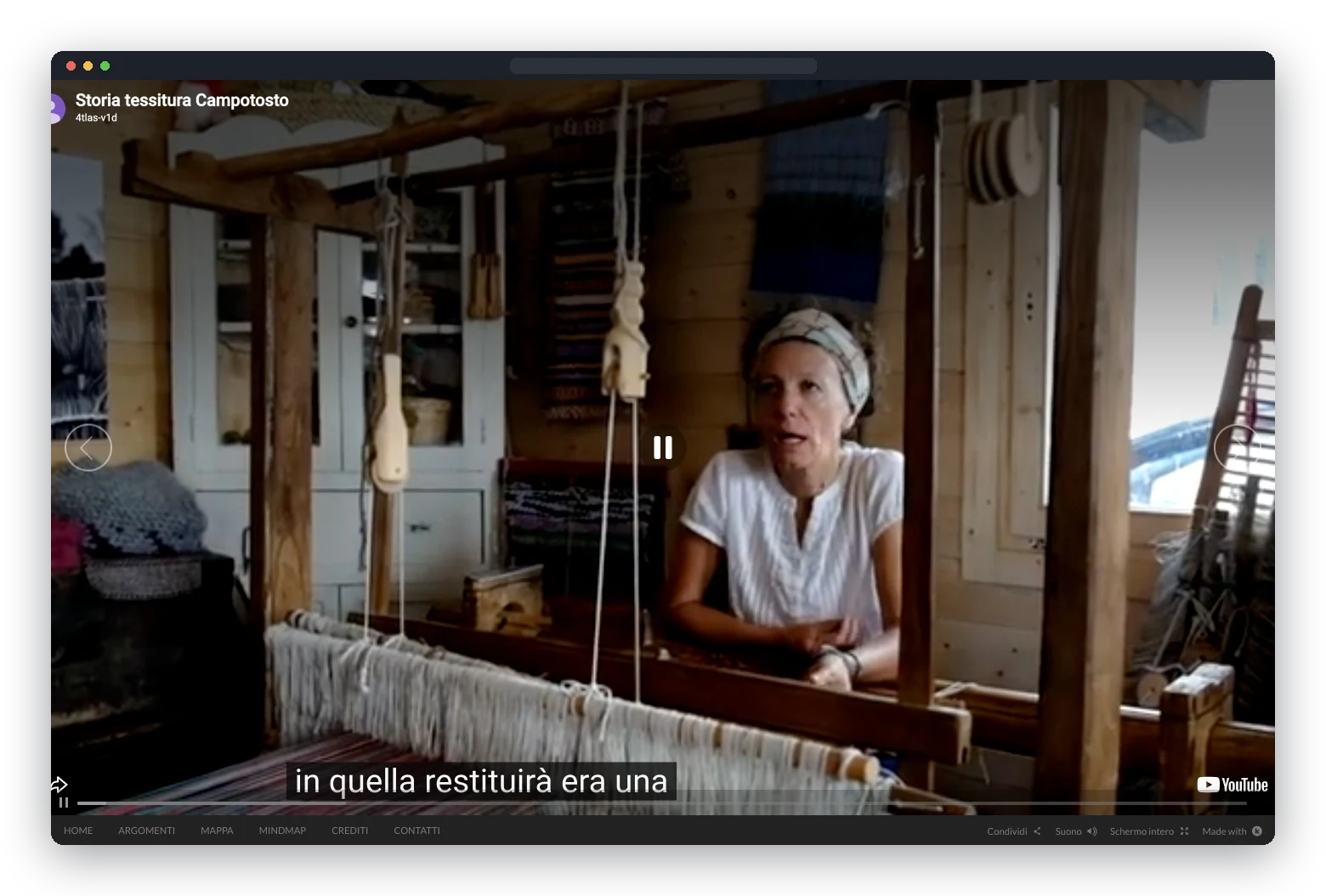
Screen of the interactive documentary: a video of Assunta seated at the loom, with subtitles
Assunta talks about weaving in one of the videos of the path.
Screen of the interactive documentary: Assunta’s workshop with an explanatory text
The workshop, in one of the in-depth chapters.
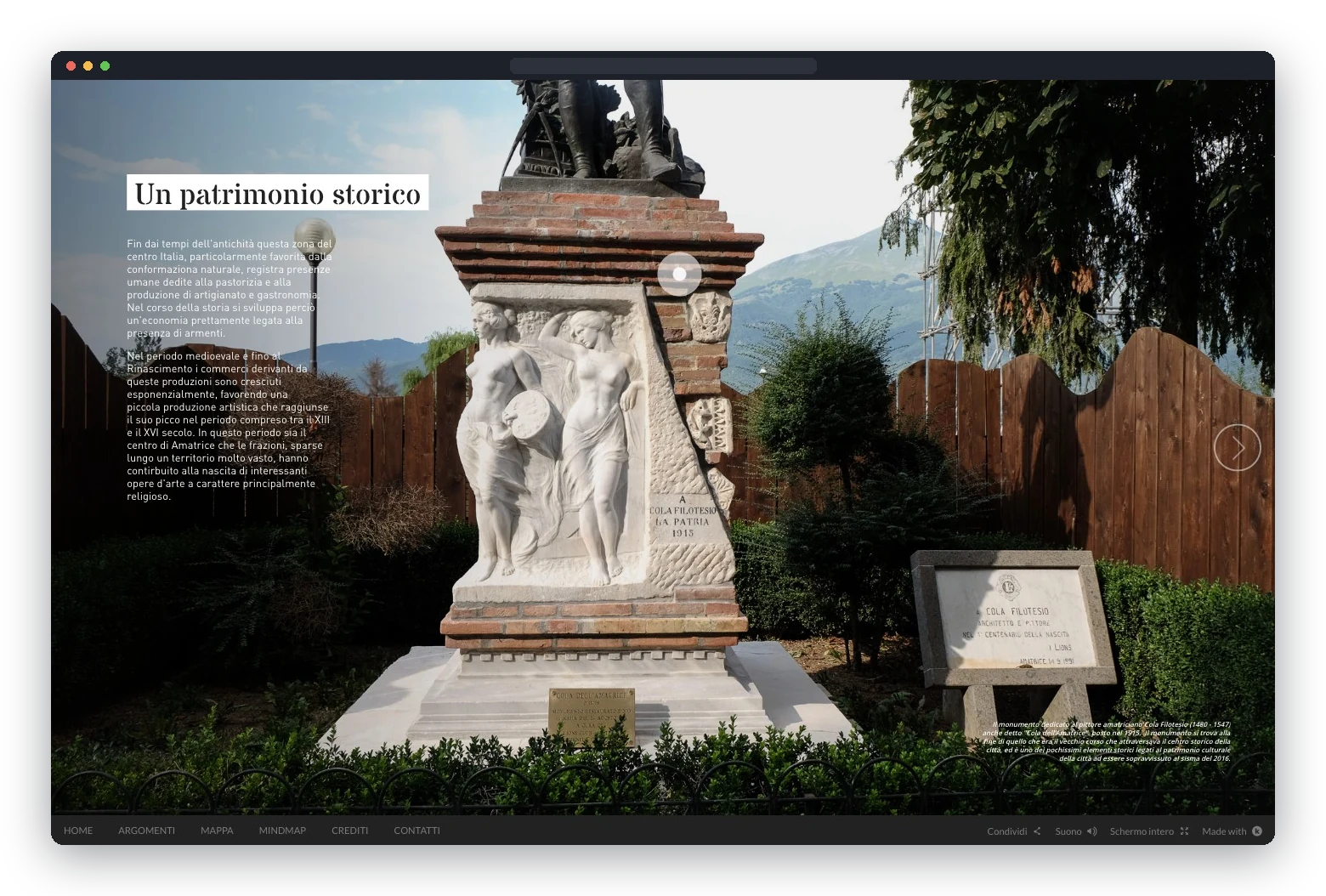
Screen of the interactive documentary with the title Un patrimonio storico, over a stone monument
The opening of the chapter on historical heritage.
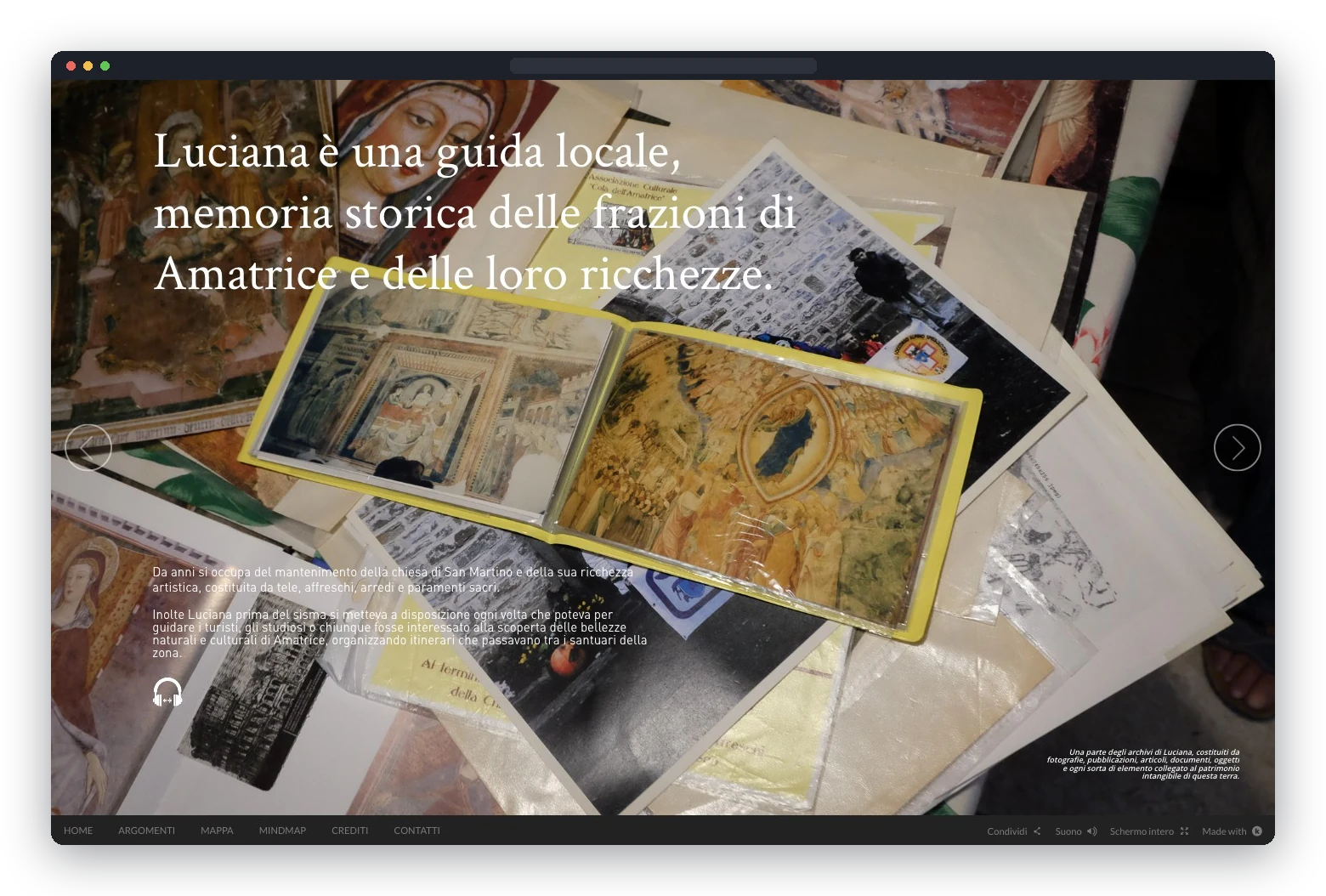
Screen of the interactive documentary: postcards and archive photographs on a table, with the text on Luciana, a local guide
Luciana, a local guide, and her archive of images of Amatrice’s hamlets.
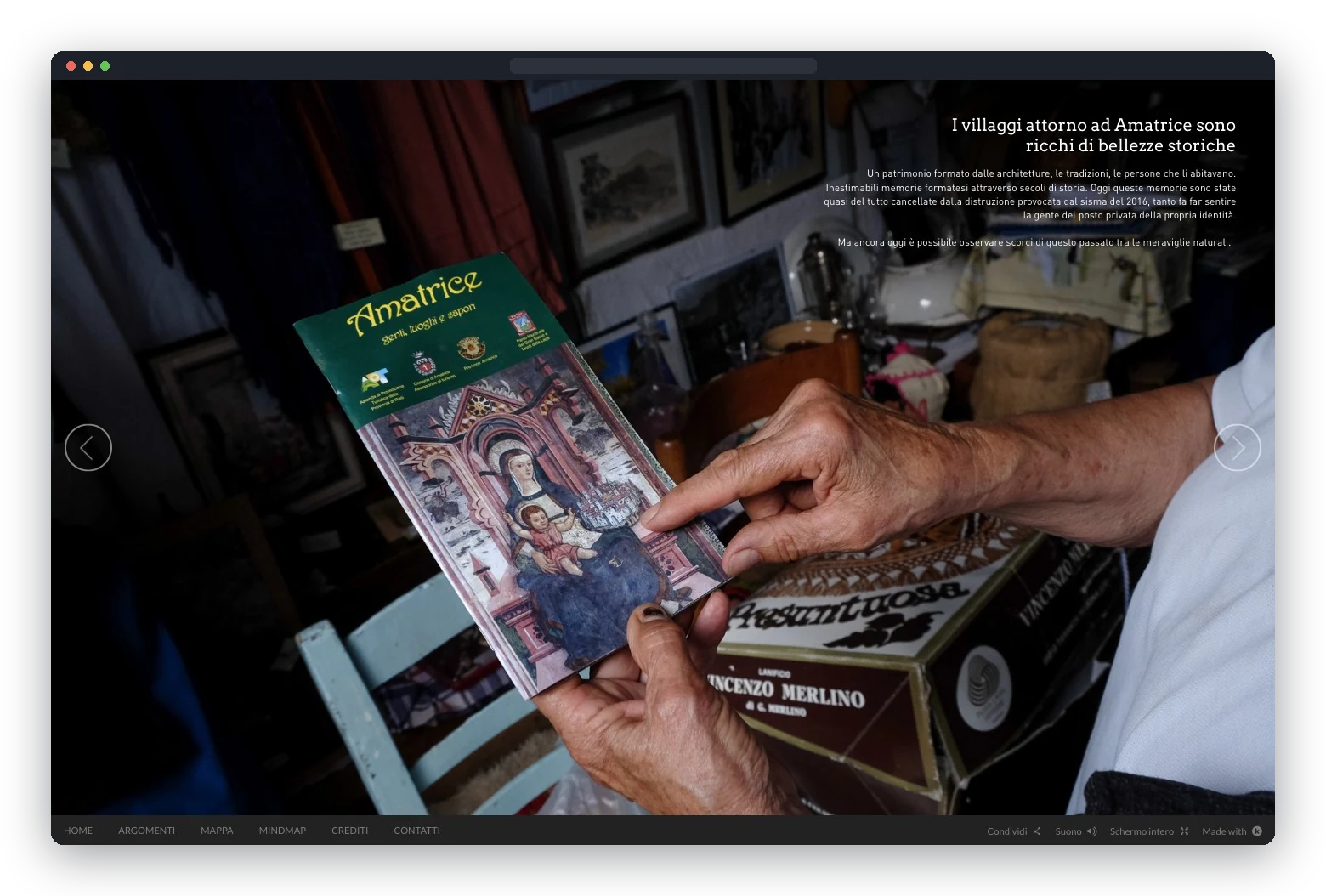
Screen of the interactive documentary: hands showing a historical publication about Amatrice
Publications and images of local history.

Making room for what is handed down

A place also tells itself through the knowledge that passes between people. Fidelis Amatrix gathers some of these traces and connects them: the work of the hands, the words of those who teach, the objects and memories that accompany the life of a community.

A project by
Mattia Gaido
Research, photography, video and multimedia storytelling
Mattia Gaido
In collaboration with
Caritas Diocesana di Rieti
Original documentary developed with
Accademia Albertina di Belle Arti di Torino
With the participation of
The people met during the research

Working on a project about crafts or the memory of a place? Let’s talk

Photo Mattia Gaido - All rights reserved