Photographing ballet: Swan Lake, act by act
Swan Lake with the Riga Opera Ballet at Teatro Regio di Torino: how dance photography changes between the court, the lake and the ball, act by act.
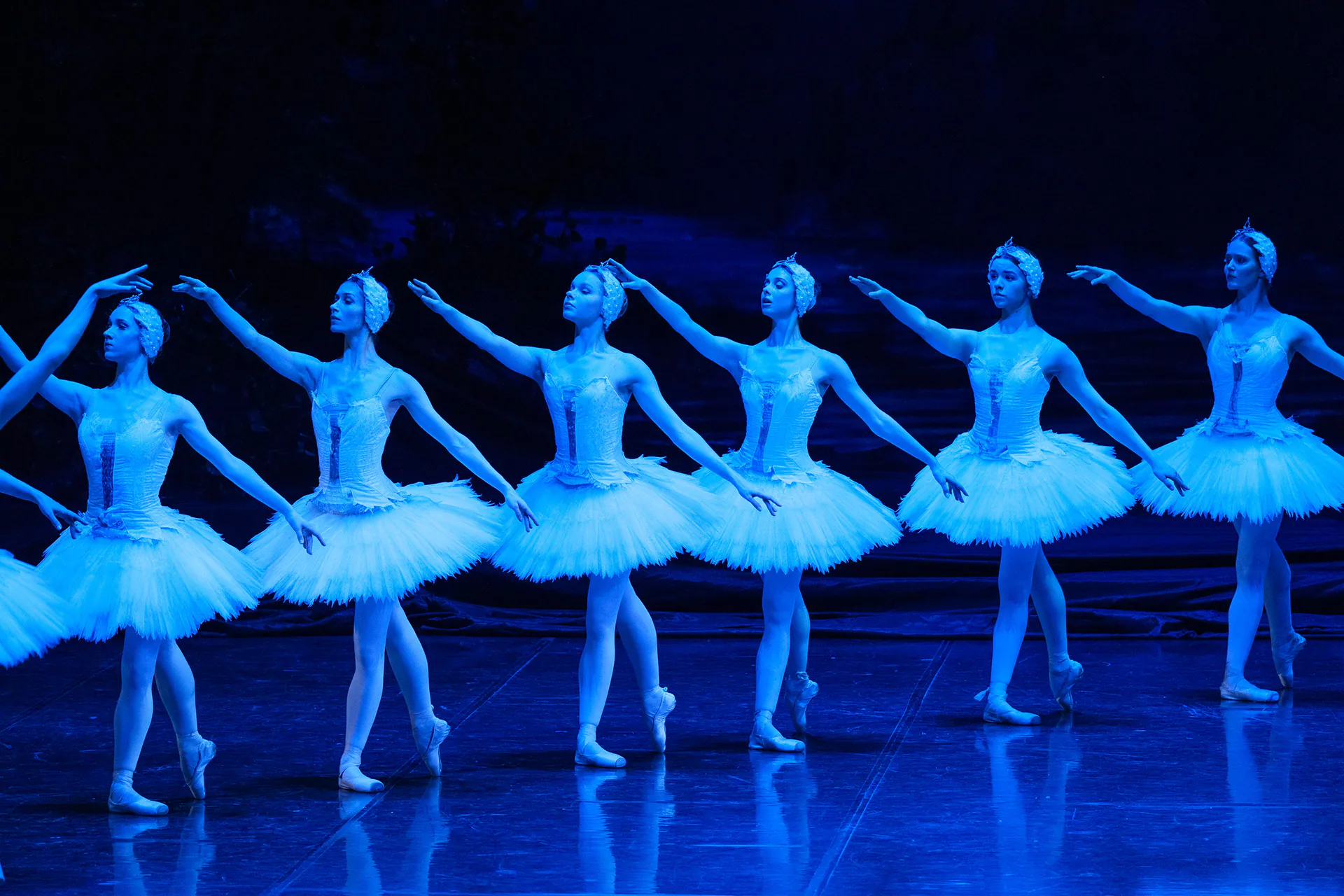
Photographing dance is different from photographing opera. In opera a gesture can last a whole aria; in ballet the right photograph lasts a fraction of a second, and almost always comes before you see it. You have to anticipate the movement, not chase it.
Tchaikovsky’s Swan Lake is the perfect case. It premiered at the Bolshoi in Moscow in 1877 without much success; the version we know was born in 1895 at the Mariinsky in Saint Petersburg, with choreography by Marius Petipa and Lev Ivanov. At Teatro Regio di Torino it was performed by the Riga Opera Ballet, in Aivars Leimanis’s staging, with Mārtiņš Ozoliņš conducting. Each act has its own light, rhythm and photographic problem.
Act one: the court
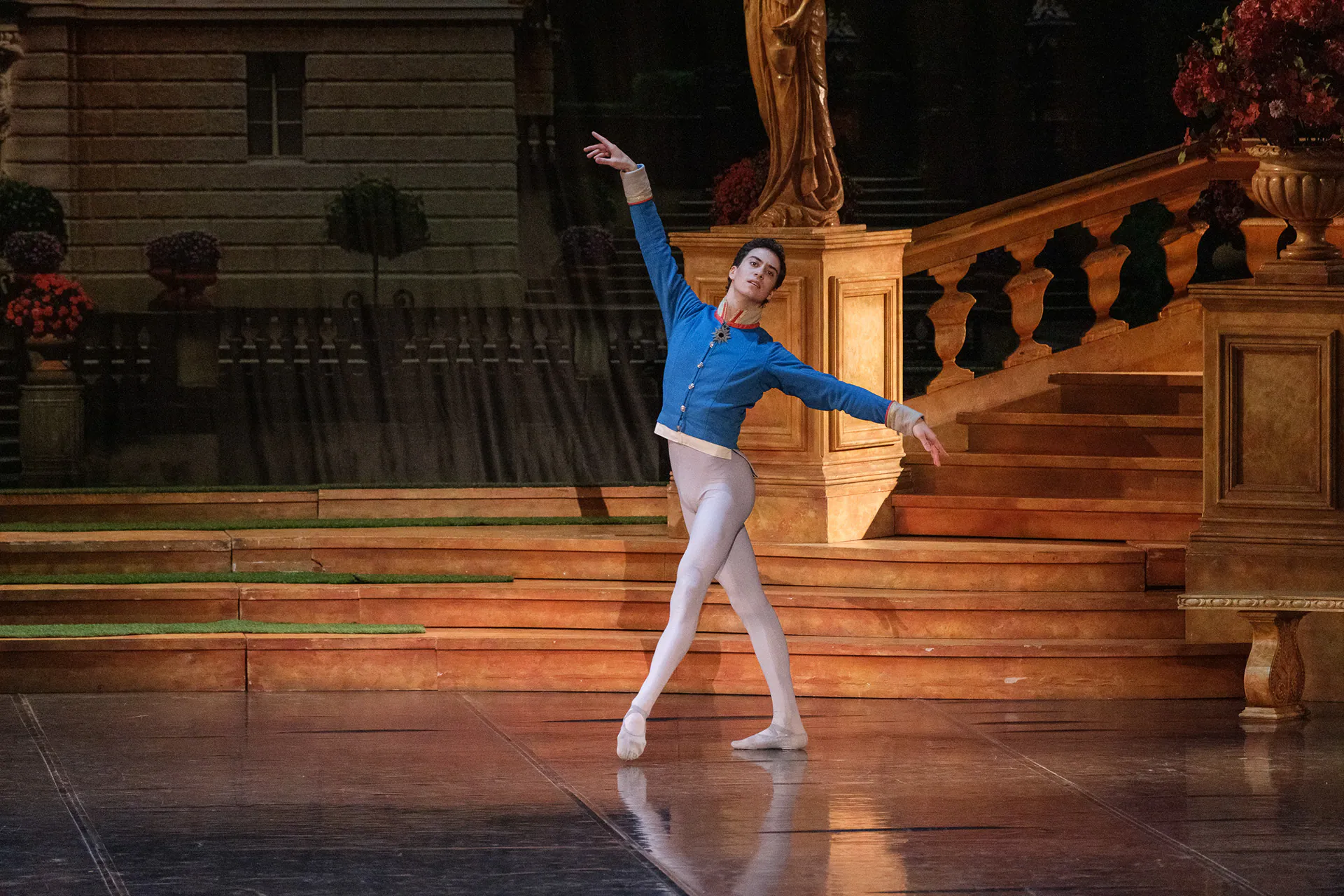
The court: warm light, painted scenery, many characters on stage.
The first act is a palace party for Prince Siegfried’s birthday. The light is warm and full, the stage crowded. The risk here is clutter: too many figures, too many colours. We look for the diagonals of the staircase and the moments when a soloist steps away from the group.
Act two: the lake
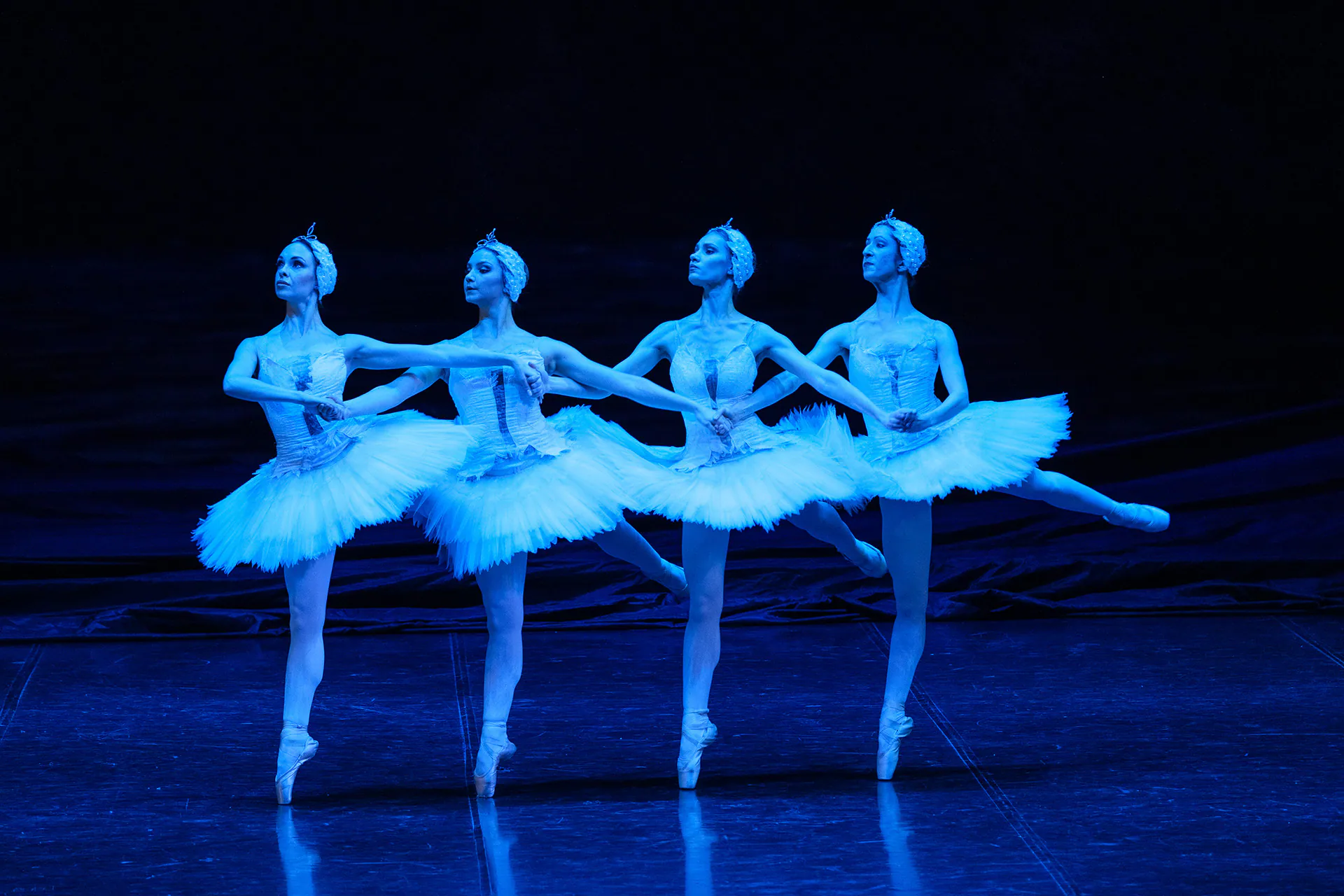
The dance of the little swans: four dancers in perfect sync.
The most famous act, one of the so-called white acts: the forest, the lake, the swans. The light turns blue and much lower, and working without flash means choosing shutter speeds fast enough to freeze movement, accepting a more demanding file. In dance a photograph works when the lines are clean: pointed feet, arms in the right position, the body at the peak of the jump. An instant earlier or later, the same image shows effort instead of form.
Ensemble scenes need another kind of attention: the overall pattern, the geometry of the corps de ballet, the symmetry. There the position in the hall, chosen in advance, matters more than the single instant.
Act three: the ball
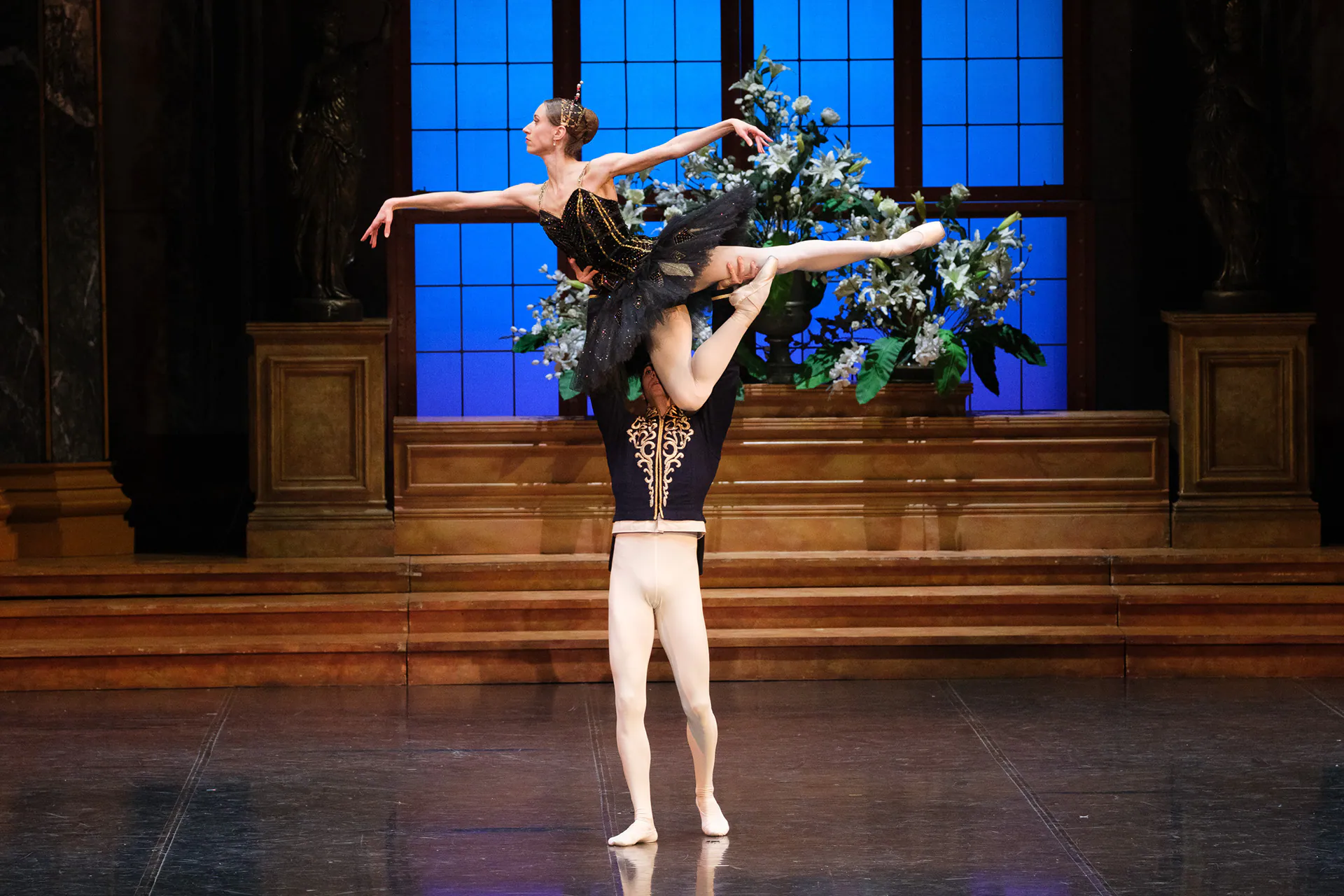
Odile, the black swan, in a lift in front of the ballroom windows.
Back at the palace, with the character dances and the arrival of Odile, the black swan. The contrast between the black tutu and the lit scenery is strong: you expose for the costumes, not the background. It is also the act of virtuosity, where knowing in advance where a musical accent falls means being ready for the top of a jump or a lift.
Act four: the finale
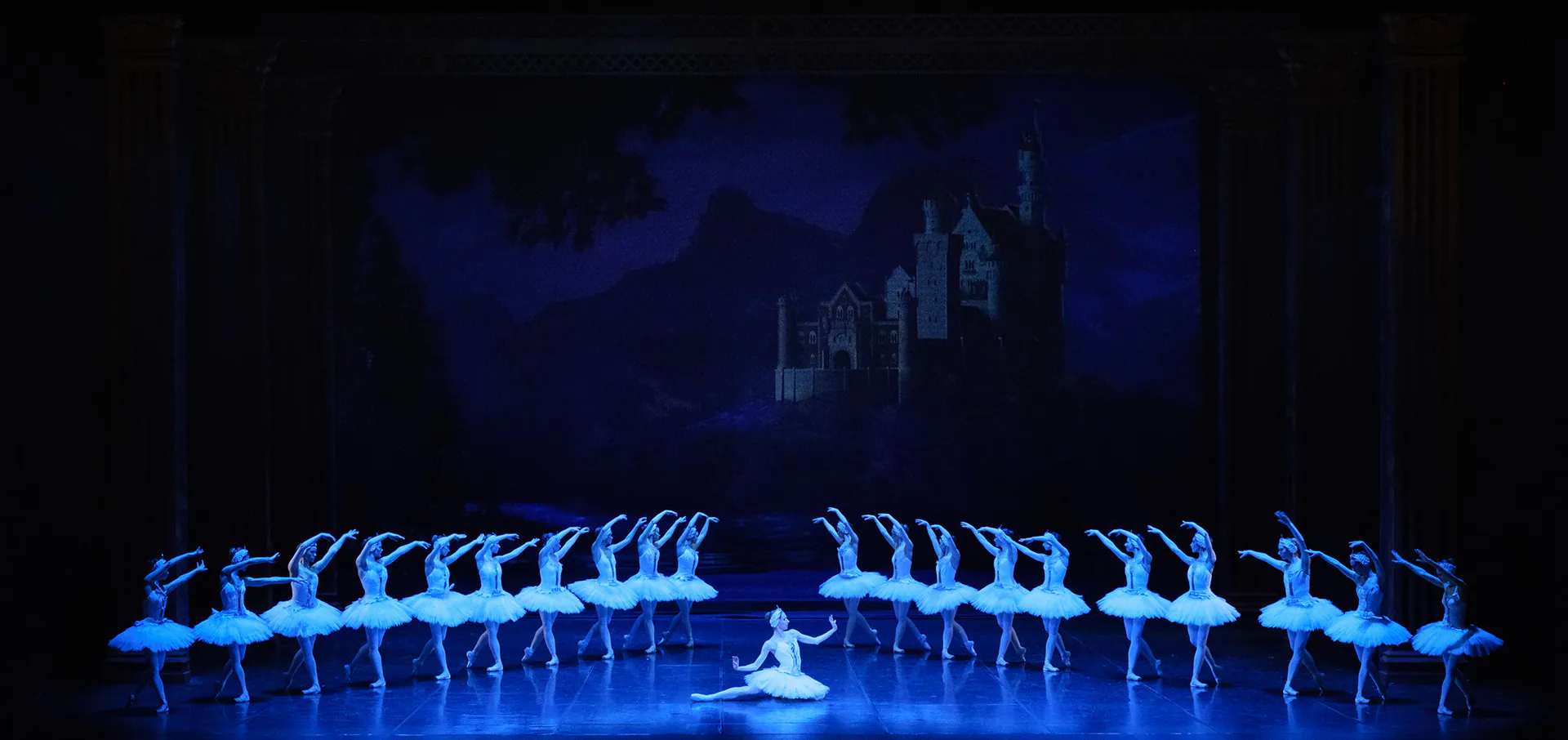
The corps de ballet seen from a distance: the whole stage becomes a drawing.
In the finale the lake returns and the stage opens up. It is the time for wide shots, the ones that tell the whole performance in a single photograph.
What remains
Images for the communication of the theatre and the company, for the press and for the archive of a tour. The full gallery is on the project page.